

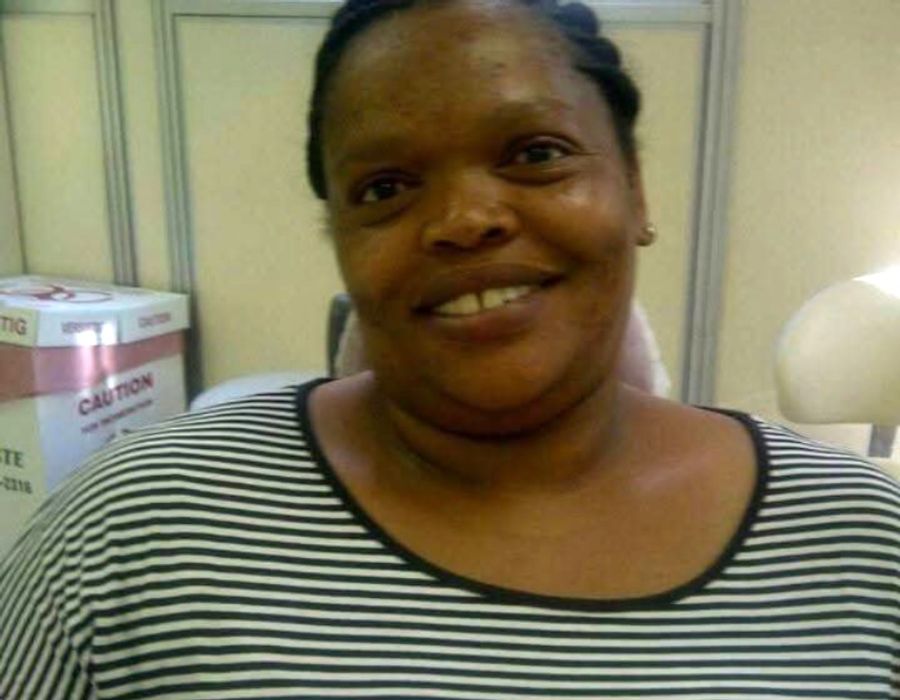
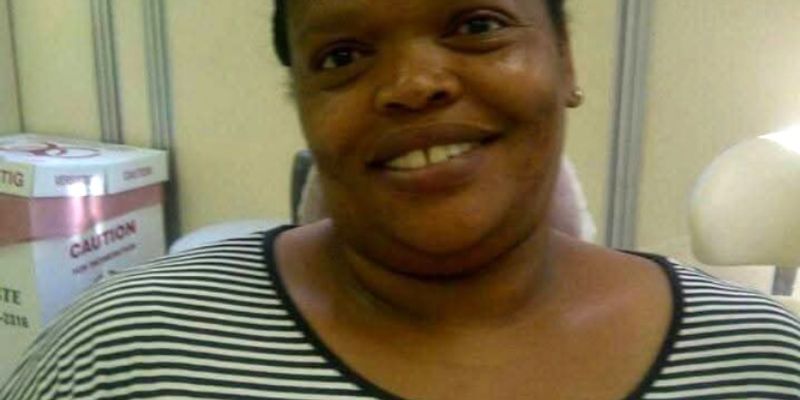
A day in the life of Meriam, 53, looks like this: wake up at 6 am, get dressed, and walk over to the main house to begin work. Clean the entire house, do the laundry, iron any clothes for her employers or their kids, cook all the meals, feed the dogs, let them out, and finish up around 7 pm. Repeat, Monday through Friday. “I do everything,” Meriam says. “There is nothing I don’t do.” Everything includes having cared for two boys, one since birth, the other since almost two, who are now 20 and 23. “I raised them both,” she says. “I even raised the dogs.”
This has been Meriam’s life for the past 20 years, and she’s not complaining. The single mother of two daughters moved to Cape Town, South Africa, with her employers after meeting them in Johannesburg through an agency. At the time, the couple was looking for a house cleaner who spoke Afrikaans and Latin. Meriam fit the bill.
In Africa, almost 85% of the workforce relies on the informal economy for their jobs and economic livelihoods. While Meriam considers herself lucky, conditions can be harsh for the informal worker, and women face gender inequalities and societal barriers that create additional hurdles. Women in the informal economy often work long hours for little pay and live in environments that can lack essential services. These conditions create barriers to women’s economic advancement. Meriam’s employers provide her with food and housing, which helps.
In Africa, almost 85% of the workforce relies on the informal economy for their livelihoods, and women face gender inequalities and societal barriers that create additional hurdles.
Meriam’s mother raised her eldest daughter while Meriam worked, but they all moved to Cape Town so that Meriam could see her daughter on weekends. When Meriam had a second daughter, the baby lived with her in a separate residence on her employers’ property and grew up there. Both her daughters used to play with her employers’ two boys. Her boss would drive her youngest daughter to the bus stop each morning for school. If she needed to print papers out for homework, she was welcome to do so at the main house. “The husband is like a father to my two daughters,” says Meriam.
Meriam is grateful for the close relationship she has with her employers. “I get along well with the family,” she says. “There are some little issues that can be sorted out, but I get along with them and their friends very well. I enjoy them.”
Small issues can include inconveniences, such as appliances breaking. A vacuum cleaner, for instance, stopped working and no one knew why. Or the washing machine broke, and her employer accused her of breaking it. “I feel the pain because it’s not on purpose,” says Meriam. “To them, you broke it on purpose, but it isn’t on purpose.” If one of her employers asked her if she had broken something, Meriam used to keep quiet. But all of this changed once she joined the South African Domestic Service and Allied Workers Union (SADSAWU). The union fights for the rights of domestic workers all over South Africa, organizing and educating them.
“Since I am with the union, I can now say, ‘I didn’t break it.’ And they need to understand that if I said that, I didn’t. The union gives me confidence to speak for myself because if I do not fight for myself, who will?” If the problem persists, Meriam can call SADSAWU, and it will give her advice on what to say or even help her find a new job. “SADSAWU gives me the confidence to speak up when I think something is wrong.” A lot of her friends today she met through joining the union. On weekends, they sometimes go to rallies and demonstrations together.
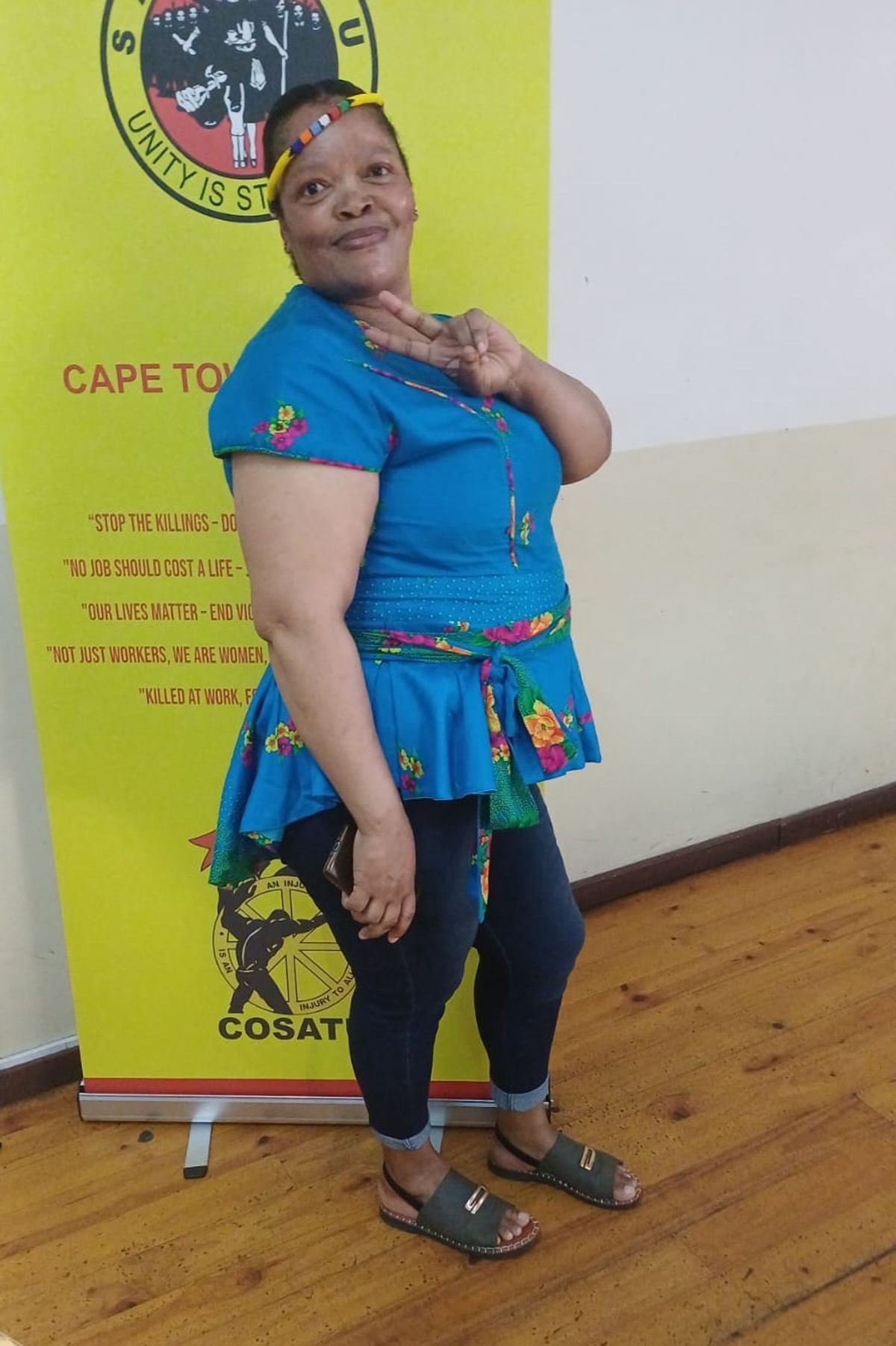
While Meriam is happy in her job, she would love to have higher wages. For the past 20 years, she has earned 10,000 Rands per month, or $625, which is considered low or struggling. It covers basic expenses for a single person, but it’s below the average national salary and inadequate for a comfortable middle-class living, especially when supporting two daughters. Still, she feels lucky by comparison to some domestic workers. “I have never used the union for a specific reason yet, as I haven’t had a big problem with wages, but it’s great to know it’s there. And if my daughter ever goes into retail, I will encourage her to join the union.”
Meriam’s proudest accomplishment in her job is seeing the boys she helped care for become kind men attending university. “I raised them with respect and understanding,” she says. “They see me as a parent. I taught them how to do things for themselves.” She showed both boys how to make eggs, spaghetti bolognese sauce, and fettuccini pasta. “I taught them that they must make their beds in the morning. It doesn’t matter how you make it, just make it.” Often, Meriam would remake their beds later on so they looked better, but she was proud the boys at least tried to make her happy!
Even though Meriam enjoys her job, she doesn’t want domestic work for either of her daughters. “I don’t want to put my kids through school for them to become domestic workers,” says Meriam, noting there isn’t any opportunity for advancement or higher salaries.“I would rather work myself to the bone so that they can get better jobs.” She said her daughters think domestic work is easy, but Meriam points to the long working hours and the pressure as tough. What’s more, most domestic workers suffer in silence if things go wrong, with many just thankful to have the job.
"SADSAWU gives me confidence to speak for myself because if I do not fight for myself, who will?”
If she had to do it all over, Meriam would pursue her passion for catering, decorating, and interior design. “I was 19 years old when I started domestic work in Cape Town. I wanted to work at a big hotel.” Today, she often cooks large meals for groups of people to keep up her passion. But what’s most important to her is her family and making sure her daughters pursue their passions. Her oldest daughter wants to work in retail, and her youngest daughter wants to work for the airlines as a flight attendant. “I want to see my daughters through high school and make sure they get a good education. Then I can save enough money to retire.”