

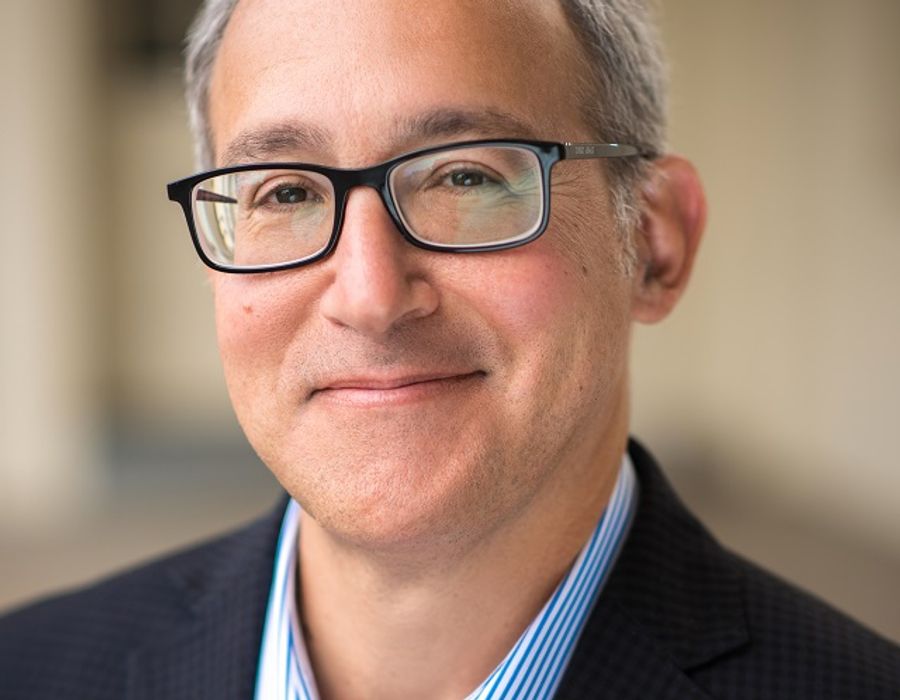
Richard Samans is an economist working at the intersection of economics with labor, the environment, and development. He has worked both inside and outside of the government, including positions in the White House, think tanks, and in organizations such as the International Labor Organization and the United Nations. Throughout his various roles, he has maintained a focus on integrating a social perspective into economics. His dual perspective as a policy insider and an economic thought leader led him to question whether modern economists truly prioritize the most important issues.
In his 2024 book, Human-Centred Economics: The Living Standards of Nations, he proposes a new set of best practices that shift the focus of economic policy from maximizing GDP to raising median living standards. His new model strives to make the world economy work better for more people.
Workers in many developing economies face weak labor protections, low compensation, and widespread informality. Sectors such as street vending, domestic work, and informal transportation often leave workers’ skills underutilized while offering little legal protection or bargaining power. Likewise, in many high-income countries, there is stark inequality and a gap between the country’s overall wealth and its median living standards.
Our economies have been run to try to increase production as much as possible. There's validity to that, but it only goes so far. Because people's living standards are a different thing from GDP.
As Samans puts it, this standard of lower income and financial insecurity across both developed and developing countries leads to a “deficit of dignity” for many workers. The current system of economic thought, which prioritizes increasing production and overall national wealth, does not formally address the diffusion of living standards throughout an economy.
Samans’ new book offers an alternative model for development, distinct in its human rights-based approach. As Samans says, "Our economies for a long time have been run to try to increase production as much as possible. There's validity to that, but it only goes so far. Because people's living standards – disposable income, whether they have a decent job, whether they can afford the necessities of life, whether they have economic security, whether their environment is killing them or sustaining and nourishing them – that's a different thing from productive output as measured by GDP.” Thus, the focus on boosting GDP must be coupled with the perspective of institutional deepening: developing a range of laws and norms that spread the benefits of economic growth throughout the economy.
Economic growth should lead to rising living standards and dignity for all citizens.
The current political emphasis on affordability may raise the question of why median living standards are not already a high priority for economists and policymakers. After all, as Samans says, “For the bulk of the population, the living standards question is one of the most potent sources of political dissatisfaction, regardless of whether it's a poor country or a well-off country.”
Samans explains that within governments and even within economic ministries or departments, labor issues are sidelined by other macroeconomic issues. The lack of emphasis on labor issues is due to a difference between governments’ ability to address them and recognition of their importance. One result of giving such limited resources to labor issues is a failure to enforce the policies that are passed to protect workers. Thus, even where labor laws exist, they are not often well enforced.
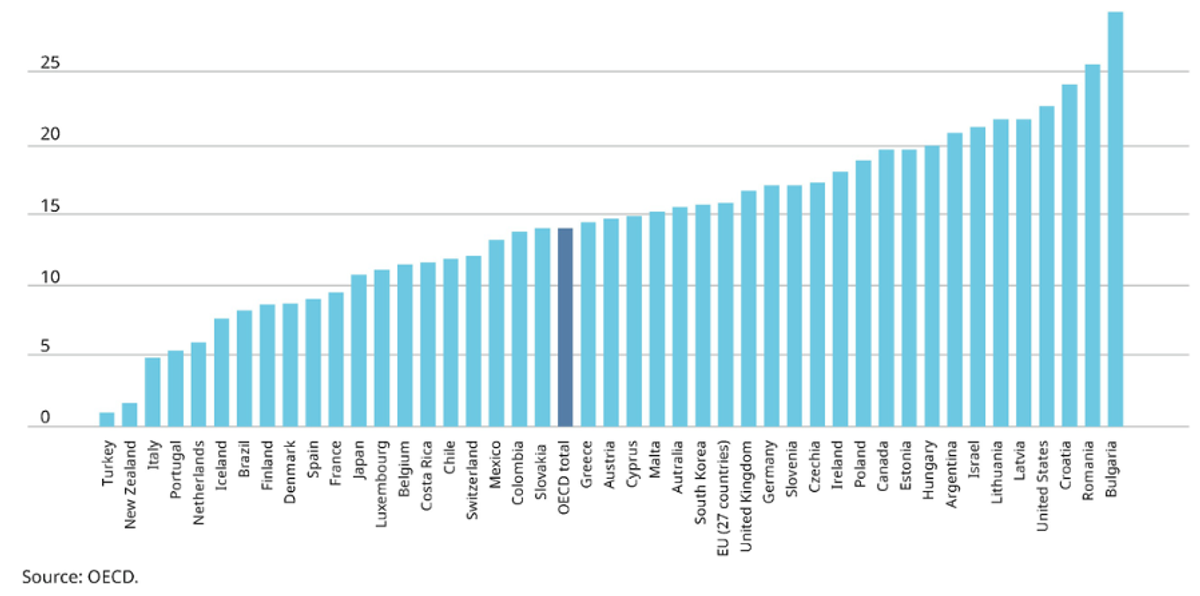
Figure 1: Incidence of Low Pay Chart from Human-Centred Economics, or Percentage of Workforce Below a Low-Wage Threshold. Notice that high-GDP countries like the U.S. are not all among the lower end of the chart.
Samans’ work is also related to environmental concerns and the “just transition” away from fossil fuels. He argues that climate policy is not solely an environmental concern but an economic one – climate is important not only to those who rely on the land for their livelihoods, but to everyone’s health, living standards, and productivity. He says, “Climate change is undermining not only people's well-being, but the way the economy functions. Heat stress really impedes labor productivity. People can't work as well, and they can't work as long during the day, which affects production…Extreme weather events extract a lot of cost, and require measures to improve the resilience of the way the economy works.”
Human-Centred Economics is an open access text. See: doi.org/10.1007/978-3-031-37435-7
As climate change worsens and environmental challenges pile up, countries must focus on improving their environmental resilience and a just transition. There is already an urgent need for institutions capable of protecting workers and supporting new forms of employment. Samans points out that there is an increasing need for “guardrails or mechanisms to make sure that the productivity growth in the economy gets diffused, that the benefits get recycled broadly in the economy.”
While others have been critical of current development practices, “I wrote this book because I thought that nobody else had laid down a specific alternative theoretical model to the standard neoliberal one with a concrete policy framework that you could actually implement,” Samans says. In addition to his model being the first to try to formally internalize the social contract in macroeconomics, it also breaks new ground by explicitly incorporating universal human rights, including labor rights. “Human rights and economics have been like two ships passing in the night for a long, long time…They’re not in the minds of most economic policymakers,” Samans adds. His work attempts to lay out “a golden rule of how you run a human-centered economy, which is to spend as much emphasis on all of these various institutional dimensions that drive better living standards at the household median level, as you do on the traditional trade policy, financial stability and your fiscal balance.”
At a time when global cooperation is fading and the U.S. is doubling down on trickle-down growth instead of this domestic diffusion and recycling, Samans’ work challenges economists and other stakeholders to reconsider the purpose of economics itself. In his view, “the whole point of an economy is to improve people’s standard of living” – Not simply to increase GDP, but to ensure that economic growth leads to rising living standards and dignity for all citizens.