

Studies & Publications
Research, studies and publications that focus on issues and workers in the informal economy. ILI provides a space for knowledge-sharing and a methodology for grassroots-led research.
34 publications
Showing page 3 of 4 (page size: 9).
Ordered by most recent publication date.
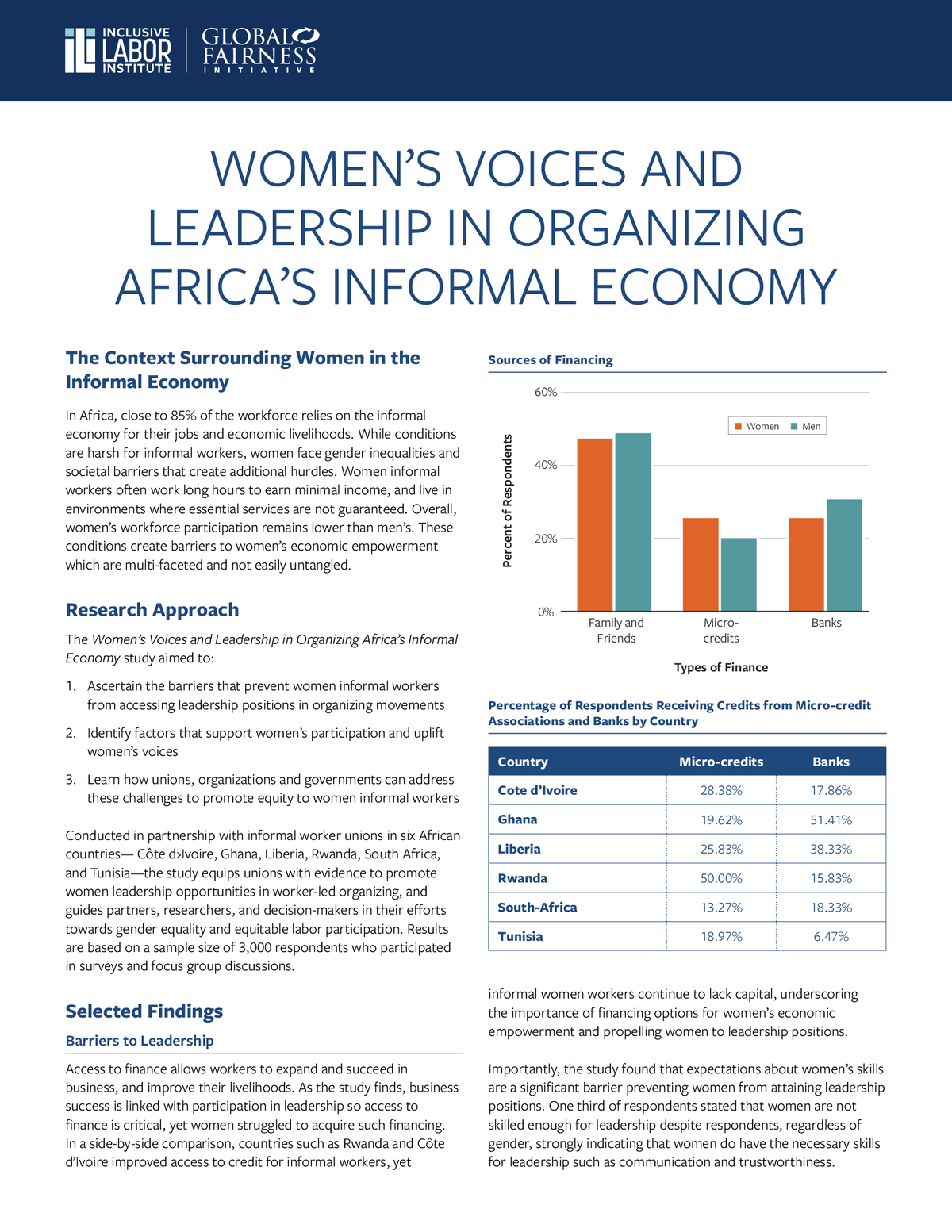
ILI Factsheet: Women’s Voices and Leadership in Organizing Africa’s Informal Economy
Women compose a majority of members within worker associations and unions, however, leadership positions and high-ranking offices remain dominated by men. Although progress has been made over the past half century towards achieving gender equality in the fields of employment, business, political participation, and leadership, the situation of informal women workers remains harsh, and the implementation of programs targeting gender equalities and societal changes has been slow and uneven. This factsheet explores the underrepresentation of informal women workers in Africa’s organizing movement, with a focus on six African countries: Cote d’Ivoire, Ghana, Liberia, Rwanda, South Africa, and Tunisia. It underscores why women are not joining organizing movements (unions and workers’ associations), and when they do, why do they continue to face discrimination and seldom reach leadership positions.
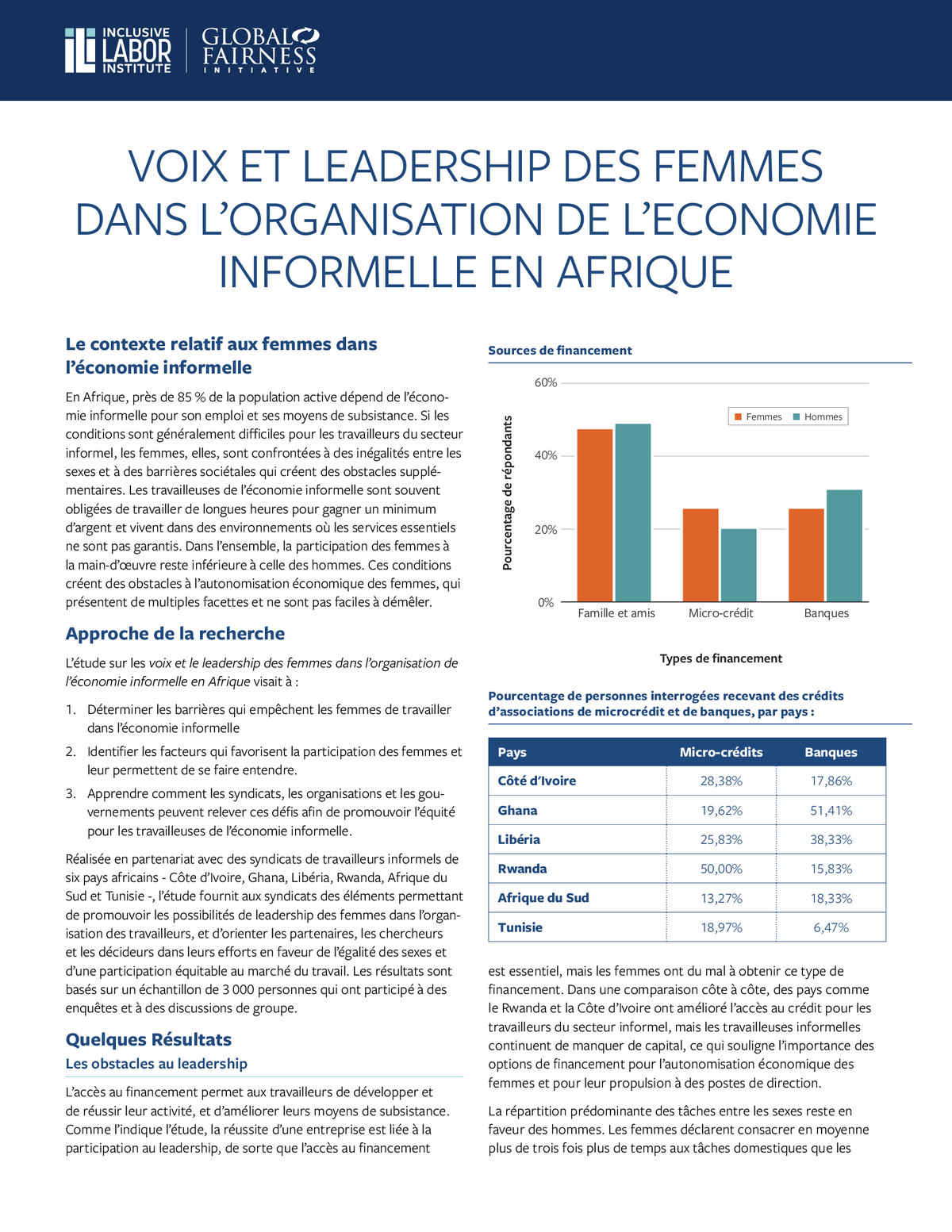
ILI Factsheet: Voix et Leadership des Femmes dans L'Organization de l'Econonomie Informelle en Afrique
En Afrique, près de 85 % de la population active dépend de l’économie informelle pour son emploi et ses moyens de subsistance. Si les conditions sont généralement difficiles pour les travailleurs du secteur informel, les femmes, elles, sont confrontées à des inégalités entre les sexes et à des barrières sociétales qui créent des obstacles supplémentaires. Les travailleuses de l’économie informelle sont souvent obligées de travailler de longues heures pour gagner un minimum d’argent et vivent dans des environnements où les services essentiels ne sont pas garantis. Dans l’ensemble, la participation des femmes à la main-d’oeuvre reste inférieure à celle des hommes. Ces conditions créent des obstacles à l’autonomisation économique des femmes, qui présentent de multiples facettes et ne sont pas faciles à démêler.
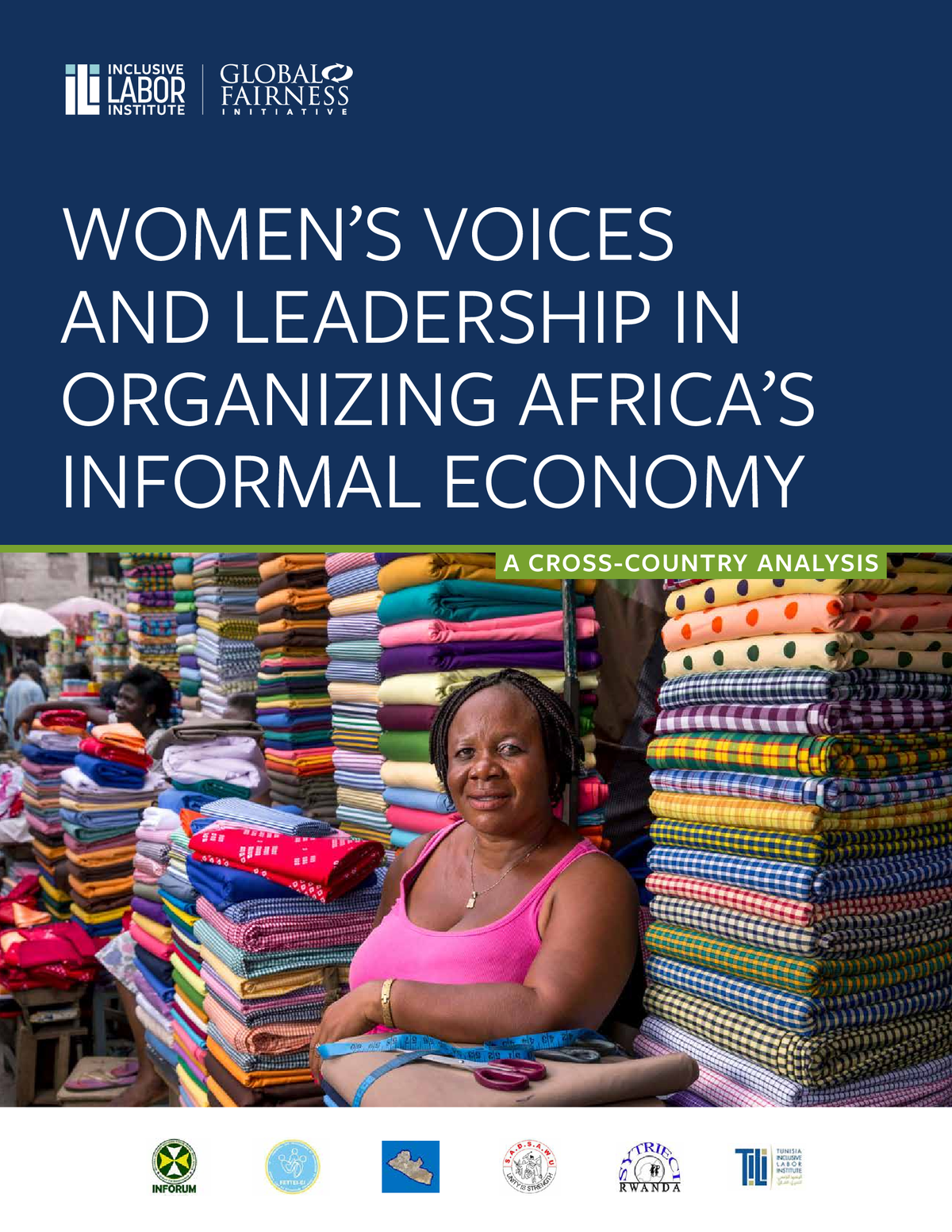
ILI Study: Women’s Voices and Leadership in Organizing Africa’s Informal Economy
Women compose a majority of members within worker associations and unions, however, leadership positions and high-ranking offices remain dominated by men. Although progress has been made over the past half century towards achieving gender equality in the fields of employment, business, political participation, and leadership, the situation of informal women workers remains harsh, and the implementation of programs targeting gender equalities and societal changes has been slow and uneven. This report investigates the underrepresentation of informal women workers in Africa’s organizing movement, with a focus on six African countries: Cote d’Ivoire, Ghana, Liberia, Rwanda, South Africa, and Tunisia. It underscores why womenare not joining organizing movements (unions and workers’ associations), and when they do, why do they continue to face discrimination and seldom reach leadership positions. Through examining the context of informal women workers’ participation, we can outline and understand the challenges that stymie their ability to obtain leadership positions, and what are the opportunities for overcoming these barriers.
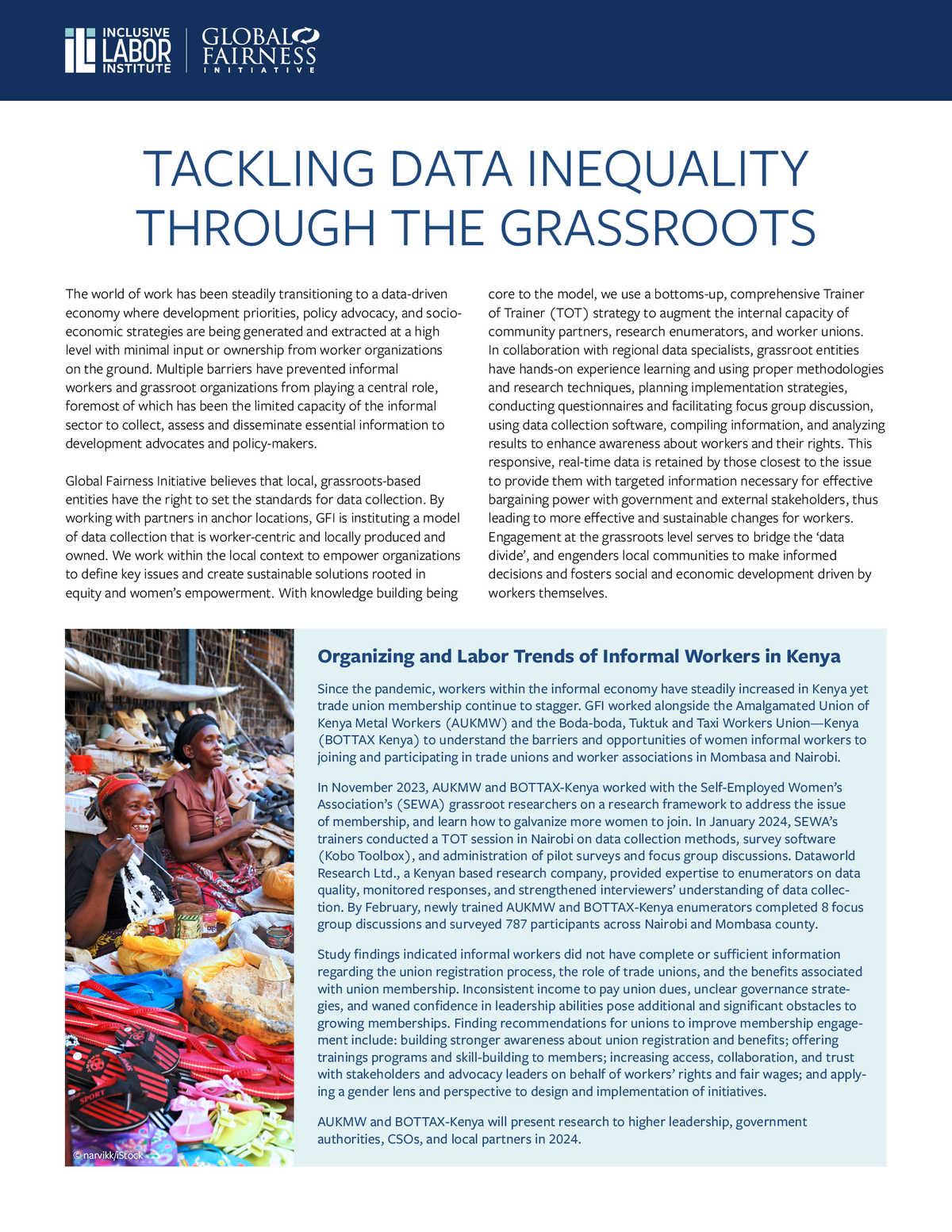
ILI Factsheet: Tackling Data Inequity
The world of work has been steadily transitioning to a data-driven economy where development priorities, policy advocacy, and socio-economic strategies are being generated and extracted at a high level with minimal input or ownership from worker organizations on the ground. Multiple barriers have prevented informal workers and grassroots organizations from playing a central role, foremost of which has been the limited capacity of the informal sector to collect, assess and disseminate essential information to development advocates and policy-makers. Global Fairness Initiative believes that local, grassroots-based entities have the right to set the standards for data collection. By working with partners in anchor locations, GFI is instituting a model of data collection that is worker-centric and locally produced and owned. We work within the local context to empower organizations to define key issues and create sustainable solutions rooted in equity and women’s empowerment. With knowledge building being core to the model, we use a bottoms-up, comprehensive Trainer of Trainer (TOT) strategy to augment the internal capacity of community partners, research enumerators, and worker unions. In collaboration with regional data specialists, grassroots entities have hands-on experience learning and using proper methodologies and research techniques, planning implementation strategies, conducting questionnaires and facilitating focus group discussion, using data collection software, compiling information, and analyzing results to enhance awareness about workers and their rights. This responsive, real-time data is retained by those closest to the issue to provide them with targeted information necessary for effective bargaining power with government and external stakeholders, thus leading to more effective and sustainable changes for workers. Engagement at the grassroots level serves to bridge the ‘data divide’, and engenders local communities to make informed decisions and fosters social and economic development driven by workers themselves.
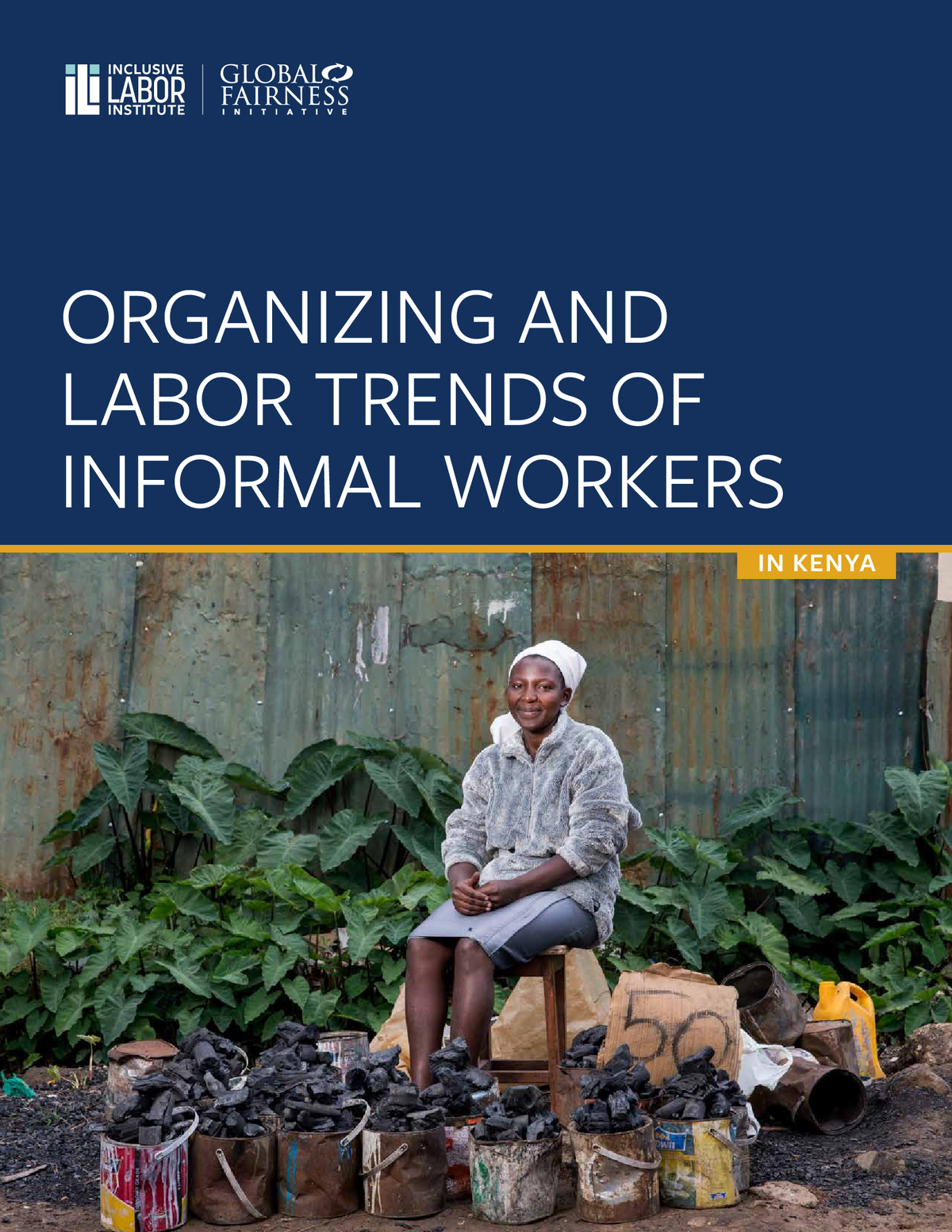
ILI Study: Organizing and Labor Trends of Informal Workers in Kenya
The International Labour Organization (ILO) estimates that approximately 62% of the global employed population operates within the informal economy.1 However, this figure is even higher in low-income countries, where informal employment may account up to 90% of total employment. In Kenya specifically, the informal sector provides employment to 83% of the total employment (16 million jobs), contributing an estimated32.8% to the GDP (World Economics, 2024). Recognizing the importance of the informal sector, the government of Kenya has implemented various policy measures, initiatives,and strategies to support it. These efforts include improving access to finance, and fostering collaboration among government agencies, non-governmental organizations, and the private sector to support informal businesses. The objective of this study was to determine the reasons why informal workers are unable or unwilling to join unions and what are the opportunities to increase union membership and participation. The research study employed both qualitative and quantitative methods adopting participatory and consultative approaches. The study was developed and conducted through collaboration between GFI, SEWA, DRL, AUKMW and BOTTAX Kenya, and incorporated grassroot enumerators in designing and execution of the study. The study established the following as barriers preventing informal sector workers from joining unions include; First, is the lack of awareness among informal workers on the registration process, the role of trade unions, and the benefits associated with union membership. Secondly is the inconsistency in income hampering workers’ ability to commit financially to union membership. Thirdly is the poor governance strategies within the unions, making them less appealing or effective for potential members. Lastly, is the presence of selfish interests among union officials further preventing informal workers from seeking union representation. This report makes the following recommendations: First, trade unions must prioritize awareness campaigns among informal workers to highlight the benefits of union membership. Secondly, trade unions should increase advocacy around fair wages and improve working conditions ensuring compliance with minimum wage requirements and legally mandated work protections. Third, a mechanism should be established by trade unions to certify individuals who qualify through on-the-job training. Lastly, trade unions should apply a gender lens into the design and Implementation of their work to ensure that the needs and inputs of women, are mainstreamed into their operations.
GFI Study: Inclusive Waste Management in Peru
The recycling sector in Peru is relatively nascent and largely informal, but the growth and opportunity to be found in the sector is considerable, whether from an economic, societal or environmental perspective. For the purposes of this report, the opportunity of most interest is the growth to be found in the economy and associated value chain of Integrated Solid Waste Management in Peru. To understand this economy requires an assessment of the laws and regulations that support and govern the sector, the actors involved and how value is added and extracted throughout the value chain. Additionally, we must look at the constraints each actor faces and the investment they require to maximize enterprise potential, all with the goal of unlocking the inherent economic value found in the sector.
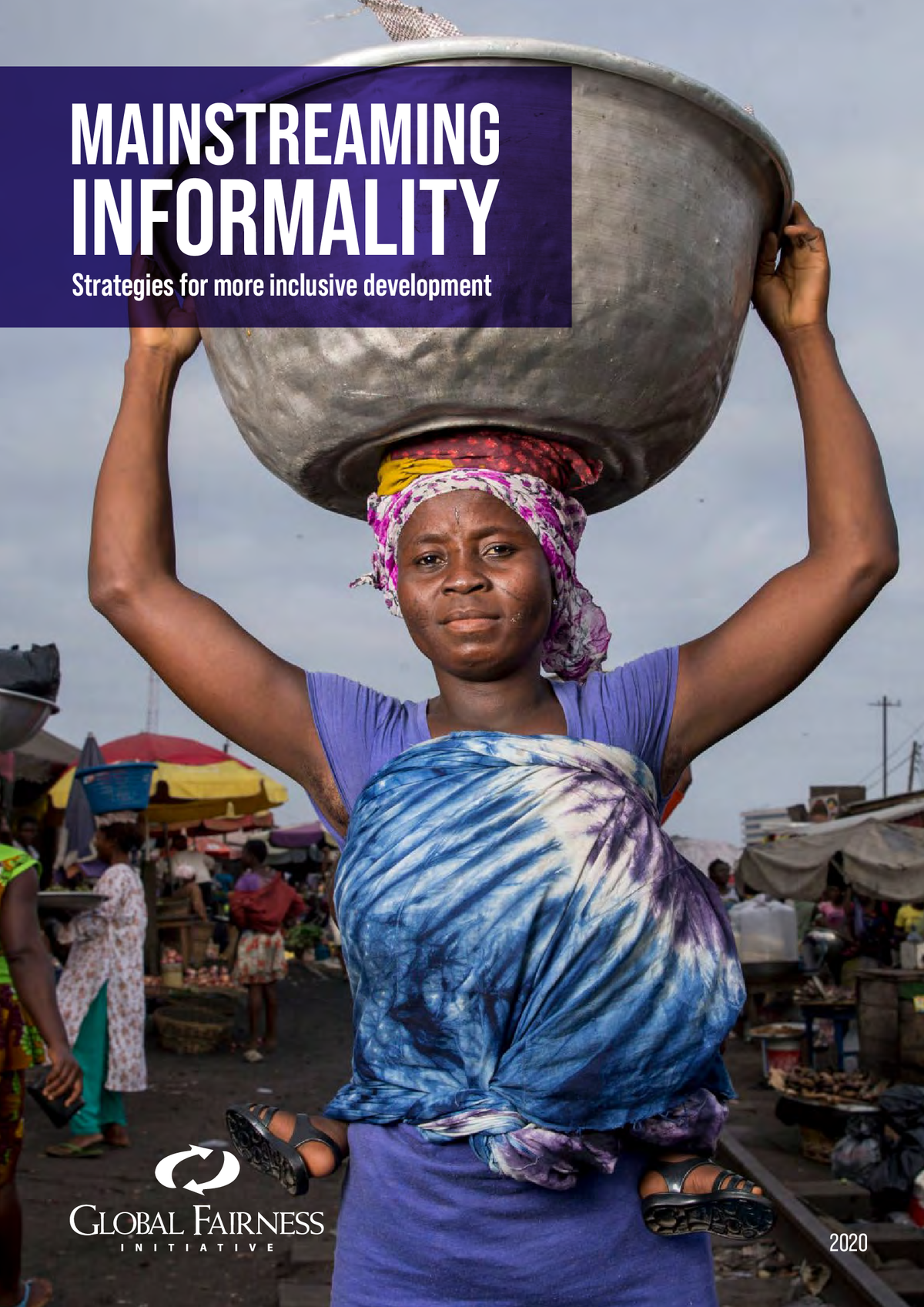
GFI Study: Mainstreaming Informality
Over four decades of research, data, and analysis has established the primacy of the informal economy in international development, but we have not yet seen informality mainstreamed into development initiatives. In this report, we call for a movement to do just that. After years of implementing programs aimed at moving informality beyond the domain of white papers and development forums and into the mainstream of development initiatives, we at the Global Fairness Initiative seek to provide the core knowledge and tools that international development practitioners require to address the unique conditions of informal workers. This report is a first step in that process, providing foundational knowledge, relevant case studies, and actionable next steps for donors and implementers to begin to mainstream informality in their work.
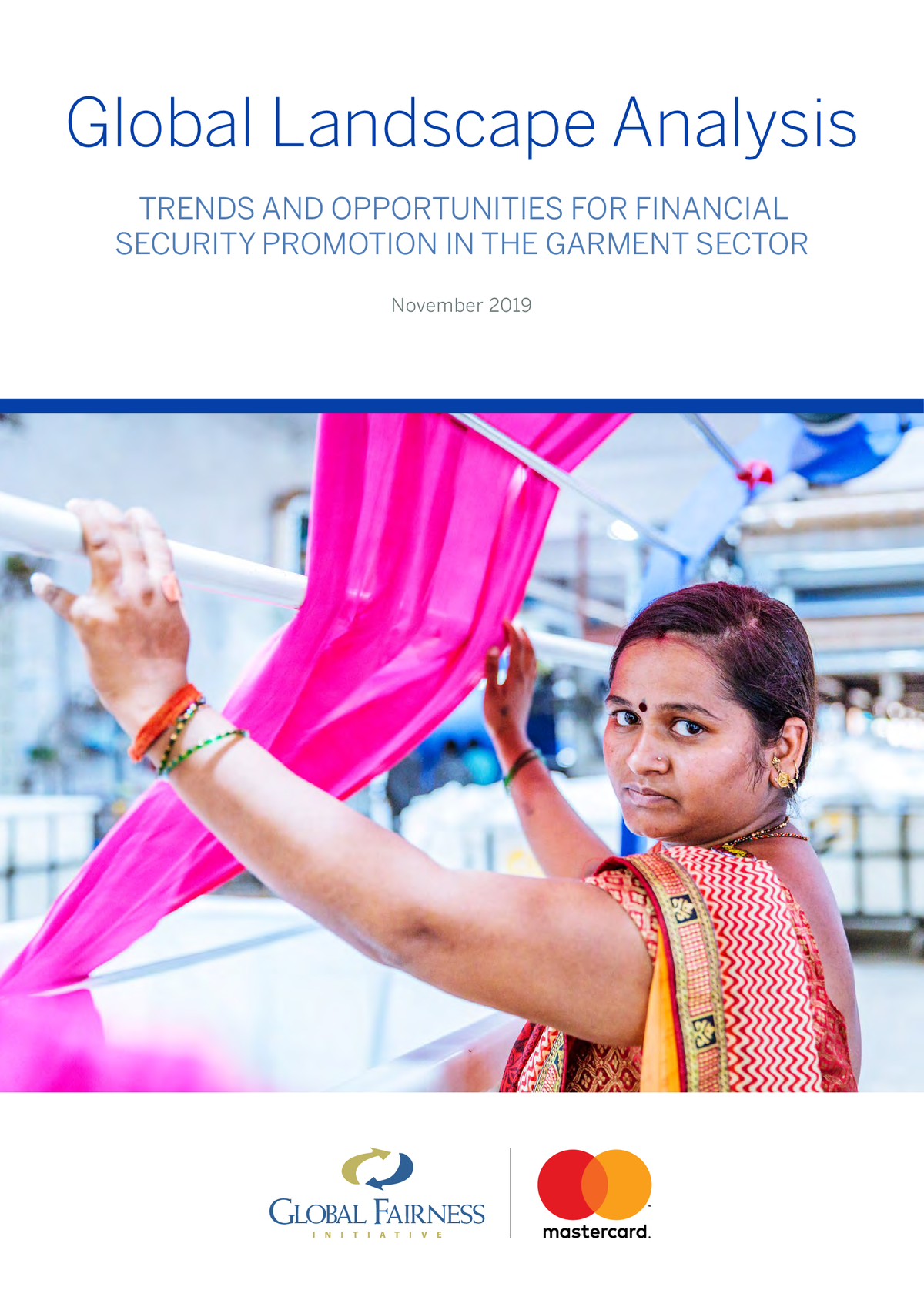
GFI Study: Trends and Opportunities for Financial Security Promotion in the Garment Sector
This report provides an overview of the garment sector and key trends relevant to financial security priorities, a summary of financial security efforts to date, barriers to adoption, best practices for worker-centered initiatives, and opportunities for wide-scale expansion of financial security initiatives, with worker welfare at the forefront
GFI Roadmap: Transitioning Tunisia's Informal Workers into the Formal Economy
Informal workers, many of them youth and women, account for 48% of North Africa’s economically active population. In Tunisia, half of all employed workers lack access to social security, and 39.2% of production goes undeclared to tax and regulatory authorities. This Roadmap addresses the economic exclusion of informal workers in Tunisia and presents strategies for incorporating them into the formal economy, with an emphasis on extending social safety nets to workers and expanding the government’s core revenue to increase and improve services. These recommendations, produced through a robust multi-stakeholder process, offer both initial steps and long-term opportunities to reduce informality and extend social services and protections to more Tunisians. Developed by Tunisians for Tunisia, the strategies in this Roadmap provide a tool for the Tunisian Government and CSOs, as well as donors and multilateral organizations, to generate targeted solutions to the problem of informality.