


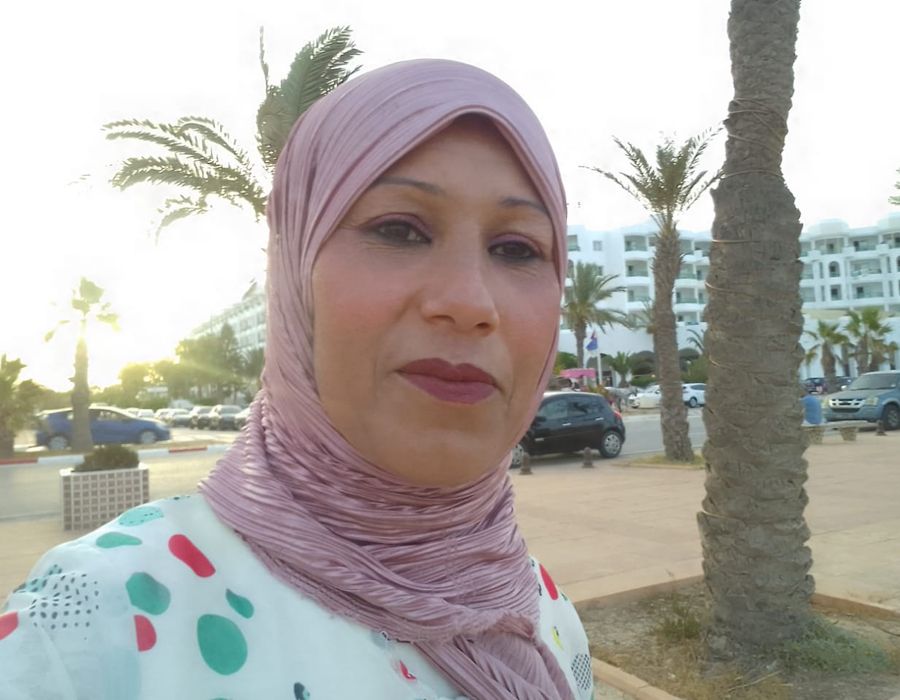

Every morning, Hajer B. wakes up at 5 am to begin her daily chores with her 13-year-old son. After helping him get ready for school and get out the door, she starts working on her farm in Kef, Tunisia. Usually, Hajer has a very specific task to do in order to get her crops ready to sell. Some days this means cultivating or harvesting her tomatoes; other days it’s packaging fruit; while still other times it’s transporting her produce to a different region. She spends four to five hours each day preparing her produce for the final stamp of approval: the “Free Women of Abida” seal on the outside of the packaging. It’s the name of her cooperative, and it gives her products more clout.
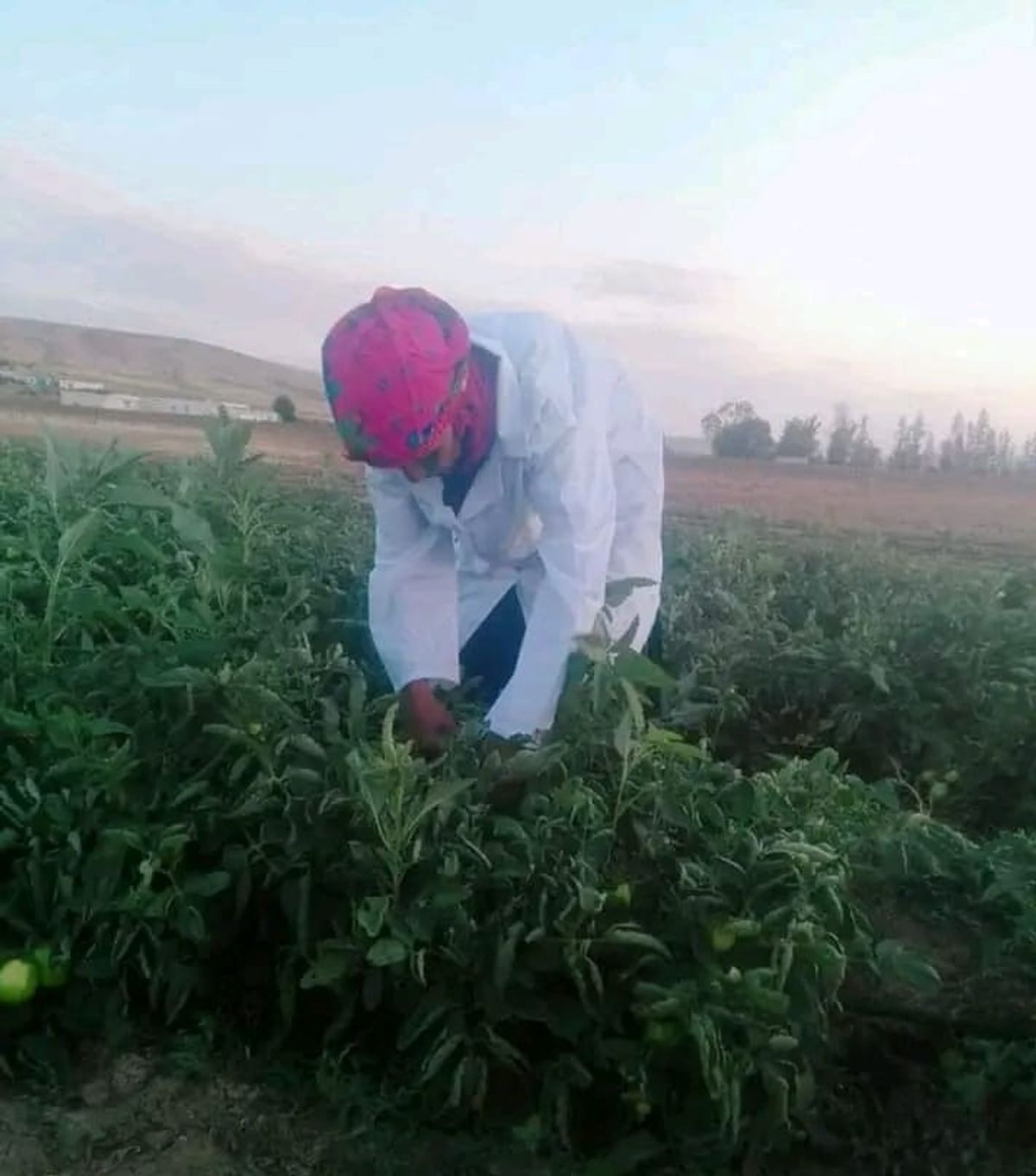
While Hajer has been farming for 20 years along with her father and before that her grandfather, it’s only in the last five years that she joined a cooperative. Actually, it was Hajer’s idea to create the cooperative, a government-sponsored entity, in the first place. “I wanted to have my own project, and I started contacting decision makers in the trade of agriculture,” she said. “They suggested I create a co-op for farmers.” She suggested the idea to the people living near her, and the regional committee of agriculture sponsored her group. The women organized and registered themselves, eventually electing Hajer as president. “It was a difficult process, meeting with different people to get it all done, but it was worth it.” About six months ago, Hajer lost her husband to illness, leaving her to care for herself and her son on her own. Being part of a cooperative gives her more stability.
In 2020, the Tunisian Government passed the “Auto-Entrepreneur” law to encourage single-employee enterprises to form by reducing barriers workers face when trying to formalize their activities. Now workers have access to essential social and health services, labor protections, and other benefits, and these are some of the things Hajer wanted for her family. Then, in 2024, the government passed the self-entrepreneur platform to help people like Hajer and other agricultural workers receive more legal and economic protection for their goods.
"The co-op has created a unified voice for women. It’s an opportunity for women to shine."
The 41-year-old widow now manages this 65-member, all-women cooperative, with the mission of taking their collective vegetables–mostly tomatoes, peppers and onions–and creating other products to sell. She likes being in the co-op because it provides extra support, like help with marketing and distribution, and in turn, more revenue. “Through the co-op, the whole process is quality controlled from the commission of agriculture,” she says. “The requirement to follow these technical steps isn’t something you can do on your own.” The strict health and safety requirements mean more people feel comfortable buying products with the cooperative stamp. “It’s a seal of opportunity to put your products there,” she says. “The client will trust the product from a co-op rather than from a person selling them without the health guarantees.”
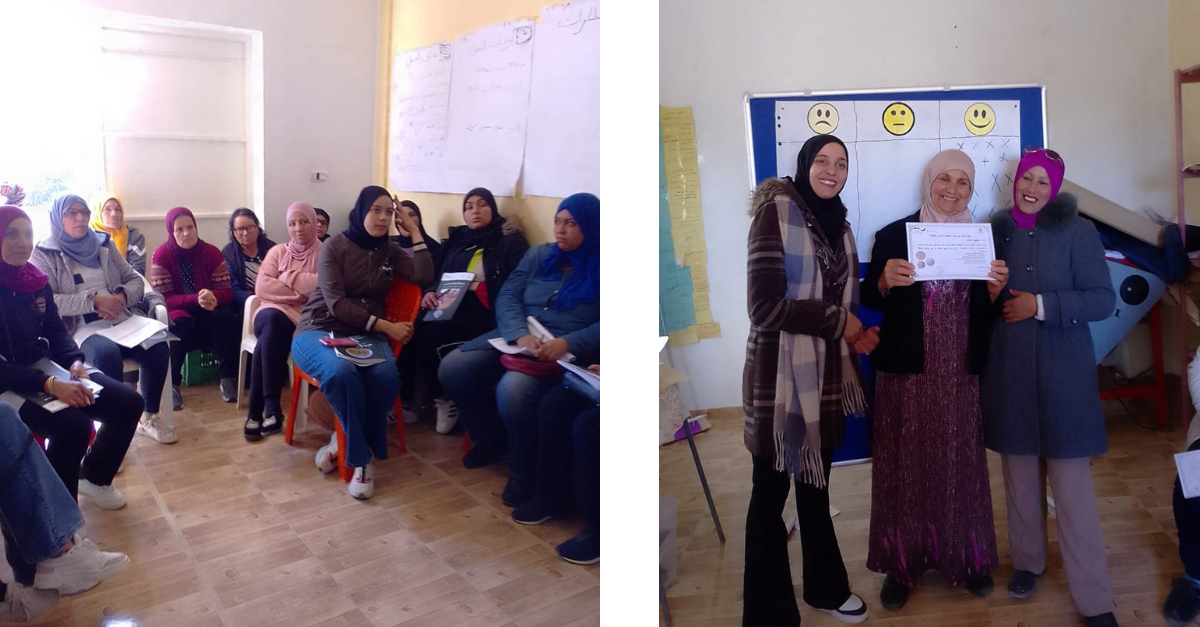
When Hajer was an individual seller, she often couldn’t meet the demands of some of her clients. But with a co-op, the women combine their produce and garner more sales. This also opens up more markets to them. Similarly, the co-op provides its members with raw materials, packaging, training sessions, financial education, and technical assistance. Each member pays around $7 a year to join. On average, women make about $8 a day, or about $200 a month, selling their goods. Hajer works 10 months a year, taking off November and December, their seasonal break.
Still, selling produce isn’t without challenges. Since they are in a rural area, transportation can be problematic, as some of the roads are hazardous and there’s no public transportation. Also, getting enough water for cultivation can be difficult, as they need authorization to do this. Financing can be difficult, especially for women whose land is under their husband’s name. If the land isn’t under your name, you can’t get a loan.
Down the road, Hajer wants to grow her co-op, buy new equipment, and expand training for women. “I hope our group gets its own certification and becomes famous in the region,” says Hajer. “And I hope I succeed as an entrepreneur, helping to create more cooperatives in other regions. Personally, I want to get financial autonomy so I don’t have to depend on anyone.”
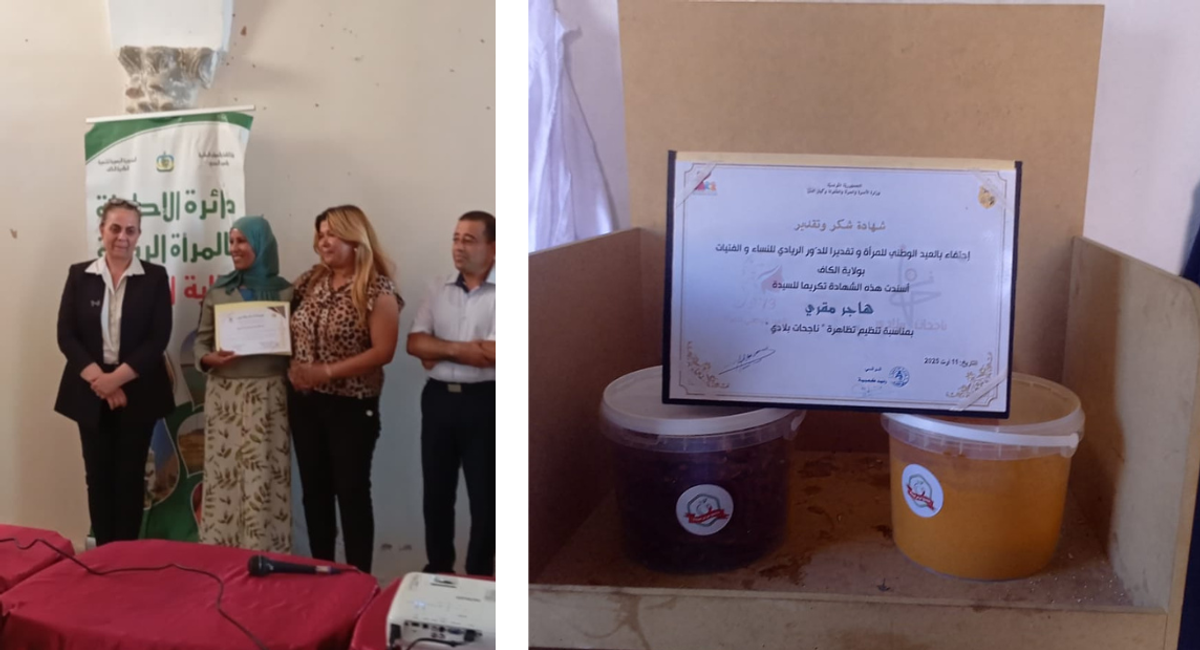
Hajer is most proud of changing women’s lives in her area. Three years ago, many women stayed at home. But now they are out in the world, earning money and gaining self-confidence. “The co-op has created a unified voice for women,” she says. “It’s an opportunity for women to shine and share ideas and a way to create new ways of working.” For instance, Hajer’s husband used to grow garlic, and she had the idea to sell it as a powder. “People are now asking for this product,” she says.
The co-op is a place where women can share and even talk about sensitive issues. Women’s economic power is very important, and the coop allows them to make a living. “The co-op is not just for selling products,” she says. “Its role is much bigger than that. It’s learning and supporting one another. It’s a family.”