


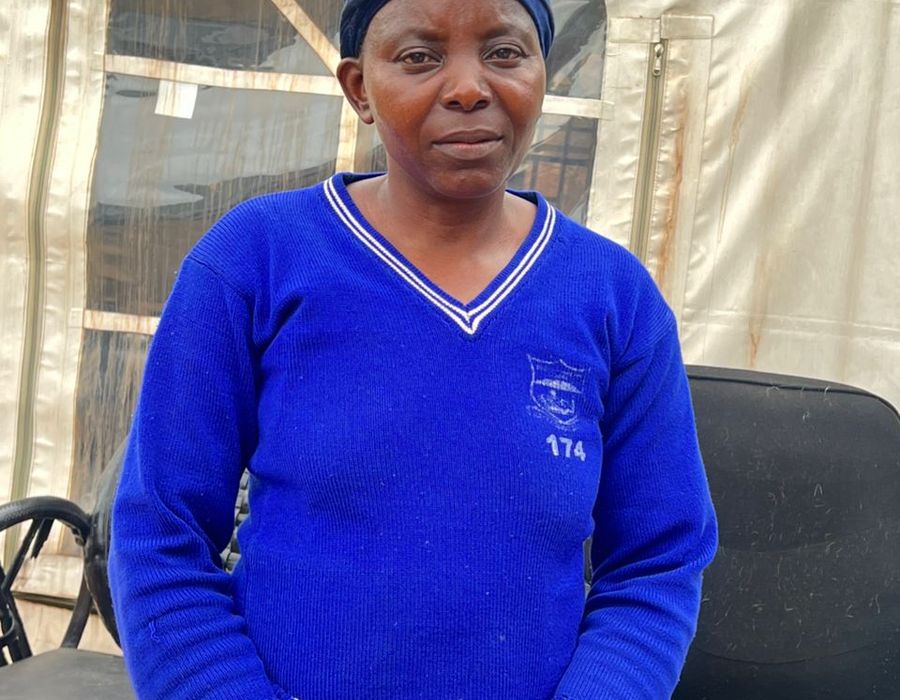
An Interview with Gloriose Uwizeyimana, Domestic Worker from Rwanda
1. What kind of work do you do? I am a domestic worker. I help my employers with household chores, and whenever I have the opportunity, I also clean the roads in my neighborhood.
2. Can you describe a “day in your life” so we understand what your work looks like each day? I wake up early in the morning and start work at 7 a.m. I usually begin by washing the cars, then I mop the floors, wash the dishes, and do the laundry. Once I finish all the household tasks, I go back home around 5 p.m.
3. Do both men and women do your kind of work? Why or why not? I do not see many men doing the kind of work that I do. Most young men prefer jobs such as security work or car washing. It is not very common for men to do domestic work because many of them look down on it and believe it is beneath them.
4. Many workers don’t have access to benefits like health care, sick leave, or a pension. Is that your experience? Can you share an example of how this affects your life? In my experience, I have not had access to a pension. I have also faced some challenges with healthcare provision. Even though it has not affected my life too severely, I know other women doing the same work who have had to go into debt in order to afford medical care.
5. Are there any positive sides to working the way that you do (in an informal business)? One positive aspect of informal work is that you are not bound by a strict contract. If you find another opportunity, you can leave more easily without going through a complicated process. Another is that it doesn’t require any academic qualifications most of the time, which makes informal work the easiest way people can earn a living.
6. What kind of problems have you had to overcome in your work? One of the main problems I have faced is employers refusing to pay me or paying me late. I have also experienced verbal abuse from some employers, which has been very difficult.
7. If you could change your job in any way, what would you change? In other words, how would you make it better? One thing that should change is that domestic workers rarely get days to rest. Many of them work every day without proper breaks, sometimes from Monday to Monday for years, which eventually starts affecting their health.
8. What is your proudest accomplishment? My proudest accomplishment is taking care of my children without asking anyone else for help. They have healthcare, they go to school, and they are well fed and clothed. All of this is possible because of my work as a domestic worker.
9. What are your hopes and vision for the future? My biggest dream is to have my own house. I also hope to see my children complete their education and build good futures for themselves.
10. Is there anything that people misunderstand about your work? What would you tell them? Many people believe that domestic workers are of low value, but I do not see it that way. This work allows me to provide for my family, so it has dignity and importance. People are wrong to assume that it is low-value work.
11. Has the union made a difference in your life? Can you share an example of how? The union helped me realize that I am not alone in this work. Through the union, I was able to meet other domestic workers and share our experiences. It also helped me understand that domestic work is real work and that we deserve workers’ rights like anyone else.