

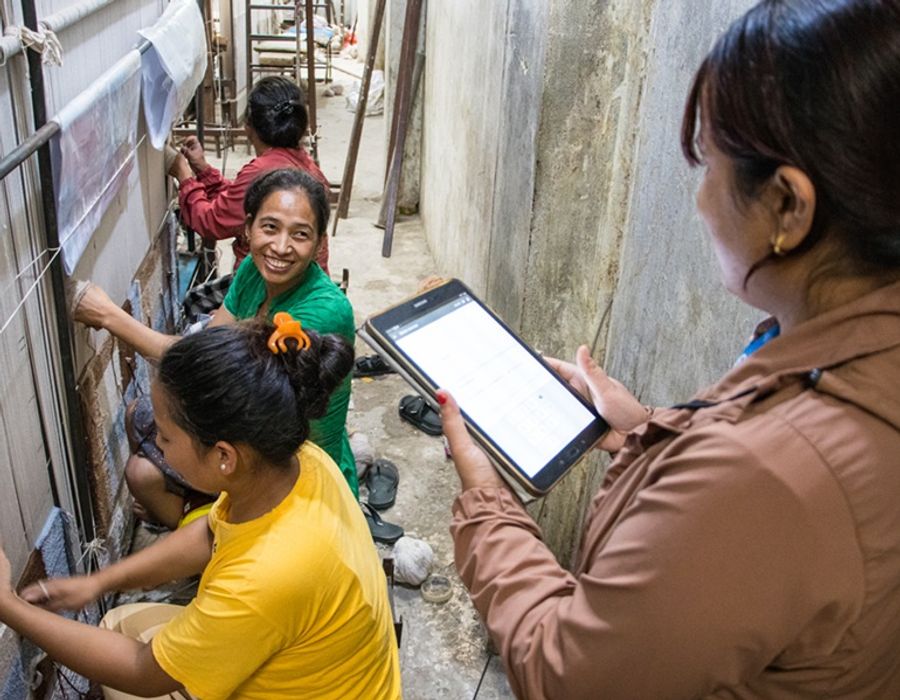
Photo by Nikki Thapa
A GoodWeave inspector speaks with carpet workers during a factory inspection in Kathmandu, Nepal.
Carpet weaving is skilled, intricate, and physically demanding work. But exploitative practices and poor working conditions make it dangerous. Weavers often suffer from vision, respiratory, skin, muscle and joint problems, while lacking many basic labor protections.
Beyond the immediate harm, these conditions can trap families in cycles of vulnerability and put children at risk of labor. Chronic health issues that lower worker productivity can force families to rely on their children to help them meet weaving quotas to pay off predatory debts. In the worst cases, children are trafficked into the industry and work at looms for up to 14 hours a day. Yet, these realities remain largely invisible to consumers around the world.
GoodWeave International was founded to address this gap and became known in the mid-1990s for certifying carpets made in India without the use of child and forced labor. But over the past three decades, GoodWeave has expanded to Nepal and more recently to Bangladesh, working across the rug, home textile, apparel, and brick industries.
A “child labor free” label, however, is more complex than it seems. In practice, ensuring supply chains are free of child and forced labor requires coordinated action by governments, companies, and communities across continents. Today, GoodWeave goes beyond certification to address the root causes of exploitation, working with actors at every level of the supply chain. Since its founding, GoodWeave has freed nearly 12,000 children from child labor and provided educational opportunities for more than 110,000. Its community-based programs reach an additional 587,000 children through efforts that serve families and communities in the GoodWeave supply chain.
Sadikshya Nepal, GoodWeave’s director of advocacy and communications, recently met with the Global Fairness Initiative to share more about GoodWeave’s impact.
Illuminating Working Conditions
One of GoodWeave’s most powerful contributions is collecting data to inform policymaking and enforcement. In 2024, it piloted a groundbreaking wage data collection tool to determine how carpet weavers in India and Nepal were being paid, using data from nearly 4,000 workers – 3,466 in India and 500 in Nepal – gathered during audits and inspections. The workers are paid by piece rate, meaning their salaries are based on the products they produce, rather than the hours they work. This product-based pay can be extremely difficult to quantify and compare against minimum wage requirements, as some workers’ wages were based on the number of knots they tied, while others’ were based on square meters of carpet completed.
To benchmark weavers’ wages against minimum and living standards, GoodWeave sent in researchers. Nepal says, “We started with the export factories, and we went all the way down to the workers that work out of their living rooms asking, ‘how much are you creating versus how much are you making?’”
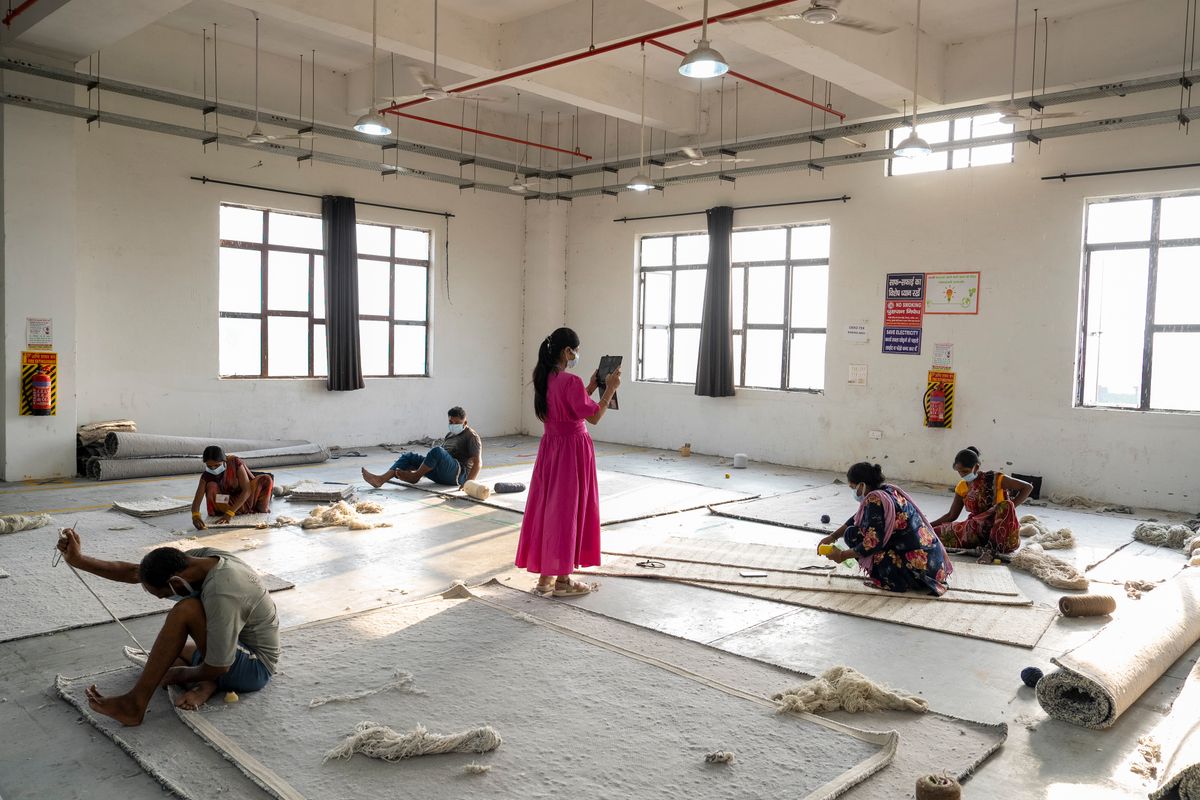
Photo by Selvaprakash Lakshmanan
A GoodWeave inspector documents working conditions at a carpet factory in Panipat, India, as workers hand-finish rugs in the background.
The pilot revealed that workers in the lower tiers of the supply chain are less likely to receive minimum wage. Businesses can use this tool to understand gaps in wage payments in their supply chain. Because of the difficulty in comparing weaver piece-rate wages to the legal minimum wage, this wage discrepancy is sometimes unknown even to exporters. After being informed by GoodWeave, many since advised suppliers to ensure all workers receive at least minimum wage, leading to wage increases in parts of the carpet supply chains.
This finding showed how even well-intentioned companies can perpetuate exploitation when labor conditions are opaque, and how targeted research can lead to immediate improvements for workers.
Embedded in Communities
Interventions like these are only possible because of GoodWeave’s long-standing local presence in South Asia. Instead of running only a single supply chain audit, the organization conducts continuous monitoring. “Our inspection and monitoring teams live within these worker communities, are part of these communities, and see the workers all the time,” says Nepal. This on-the-ground presence is essential at every stage: Nepal explains, “We are there at the prevention side, the monitoring and inspection, and when an issue comes up, we remediate.”
A key aspect of GoodWeave’s prevention measures is its integration of social programs. These initiatives aim not only to help current workers improve their conditions, but also to address the systemic challenges that enable child and forced labor in the first place, such as limited access to education, childcare, and credit. From vision clinics to financial literacy classes to gender empowerment programs, GoodWeave has created a holistic model beyond the workplace to make child labor prevention efforts successful.
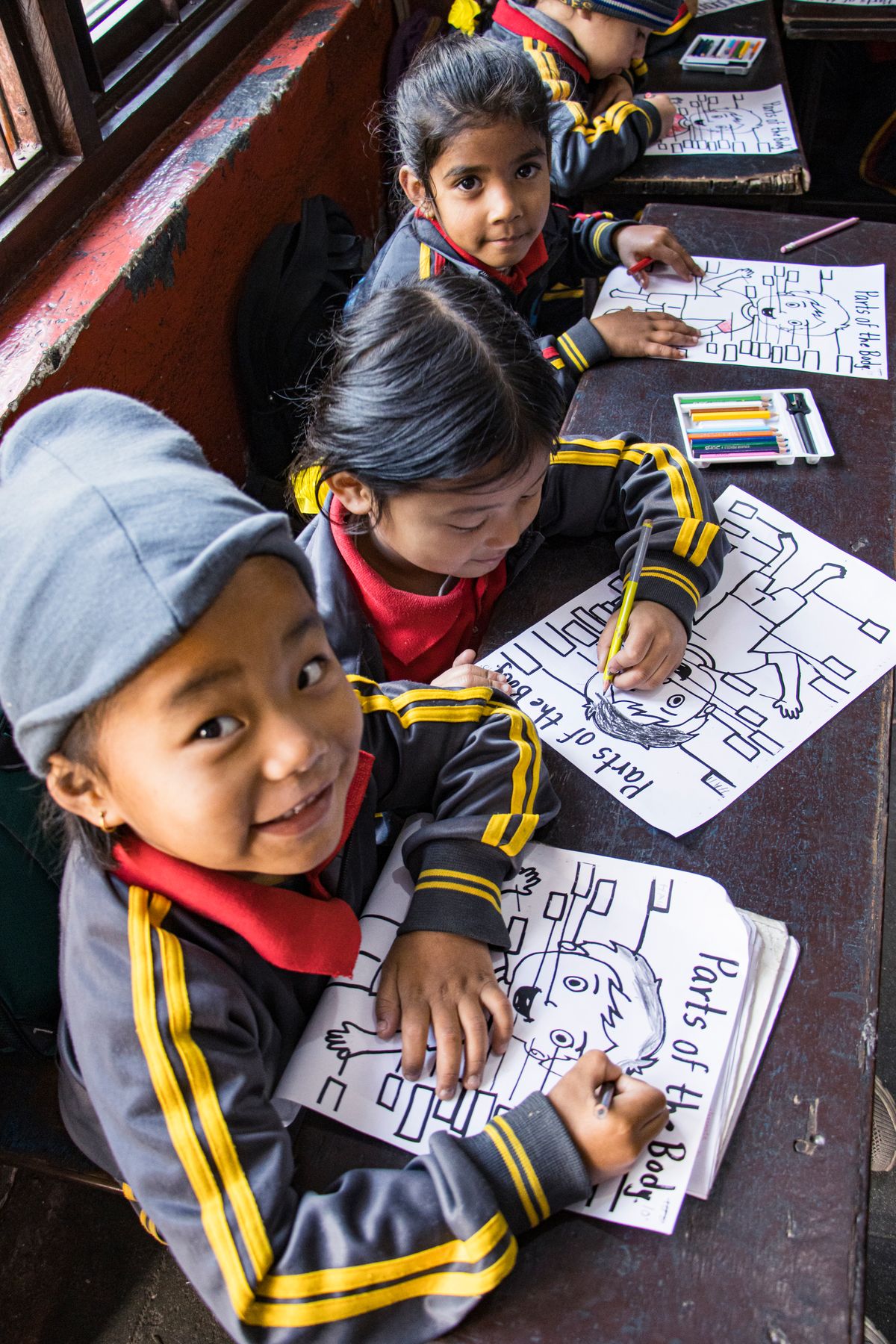
Photo by Nikki Thapa
Children participate in a classroom activity at a GoodWeave-supported daycare center in Kathmandu, Nepal.
Emerging Challenges
In addition to challenges like lack of childcare or weak policy implementation, GoodWeave confronts emerging drivers of exploitation. Climate shocks, for example, increase the risk of forced labor, child labor, and human trafficking. Reflecting on catastrophic climate events such as the 2025 floods in Nepal, Nepal explains, “climate-related disasters, including flooding and landslides have become increasingly common. These disasters increase children’s vulnerability to child labor in sectors such as carpet manufacturing and brick kilns. “You don’t have a means of income, you don’t have a home, you don’t have a school. Everybody in the family needs to work just to get by. Children are more likely to drop out of school to assist their parents make up lost livelihood caused by climate catastrophies.”
Yet, despite their clear ties, climate and labor are seldom integrated in policy. In Nepal, for instance, national action plans exist for both child labor and climate, but there is no inter-ministerial coordination. Without this collaboration, neither issue can be effectively addressed. GoodWeave’s advocacy seeks to close this gap by highlighting these overlaps. In 2025, it published a first-of-its-kind study linking climate disasters to child and forced labor in Nepal, and has since pushed for governments and international actors to better align their strategies.
Looking Ahead
As climate disasters intensify and drive migration, GoodWeave’s work is more urgent than ever. But even as new challenges arise and some countries turn toward protectionism and retreat from international development, there are reasons for optimism. “It’s a very appropriate time to make systems change at a structural level, because systems change is already happening in South Asia,” Nepal says, referencing recent elections in Nepal and Bangladesh.
As it moves forward, GoodWeave is looking to continue building partnerships with businesses and local and international NGOs. “We're here to build partnerships with whoever's doing good work, and there's plenty of good work happening on the ground.”
Ultimately, GoodWeave’s evolution makes it clear that ending exploitation requires lasting change. It demands sustained local engagement, better data, and coordination across policy, markets, and communities. For every child kept in school, there are still others joining the workforce too soon. Organizations like GoodWeave have made profound progress, but there is plenty left to do.