


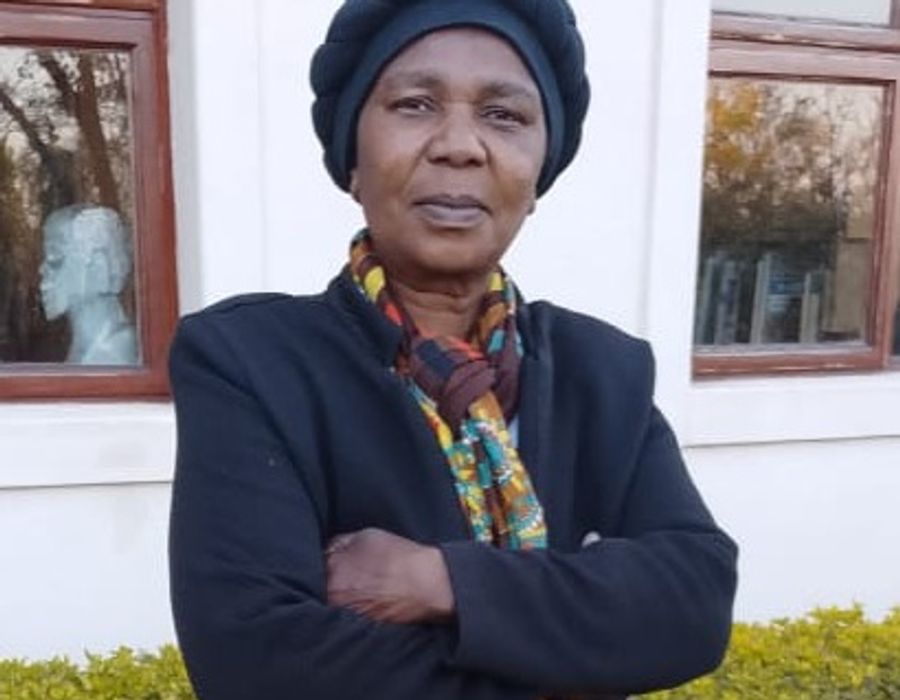
For the past 14 years, Gladys M. has worked as a domestic worker for her current employer, often doing more than just cleaning the house. Two years ago, her employer’s husband became very ill, and Gladys took care of him for a year before he died, working Monday to Sunday. She would help him get ready and tend to him in bed each day, in addition to washing the dishes, cleaning downstairs, cleaning upstairs, doing the laundry, making breakfast, and occasionally bathing and caring for the dogs. “Her house is very big,” says Gladys. “Usually, it would take two girls to do this house, but I clean it alone.”
The 59-year-old travels over an hour to get to her job each morning, taking two buses to New Castle, South Africa. Still, the commute and long hours are all worth it. “I enjoy my job because I know them,” she says. “When my boss is cross or happy, I know how to deal with it. I like the woman I work for.”
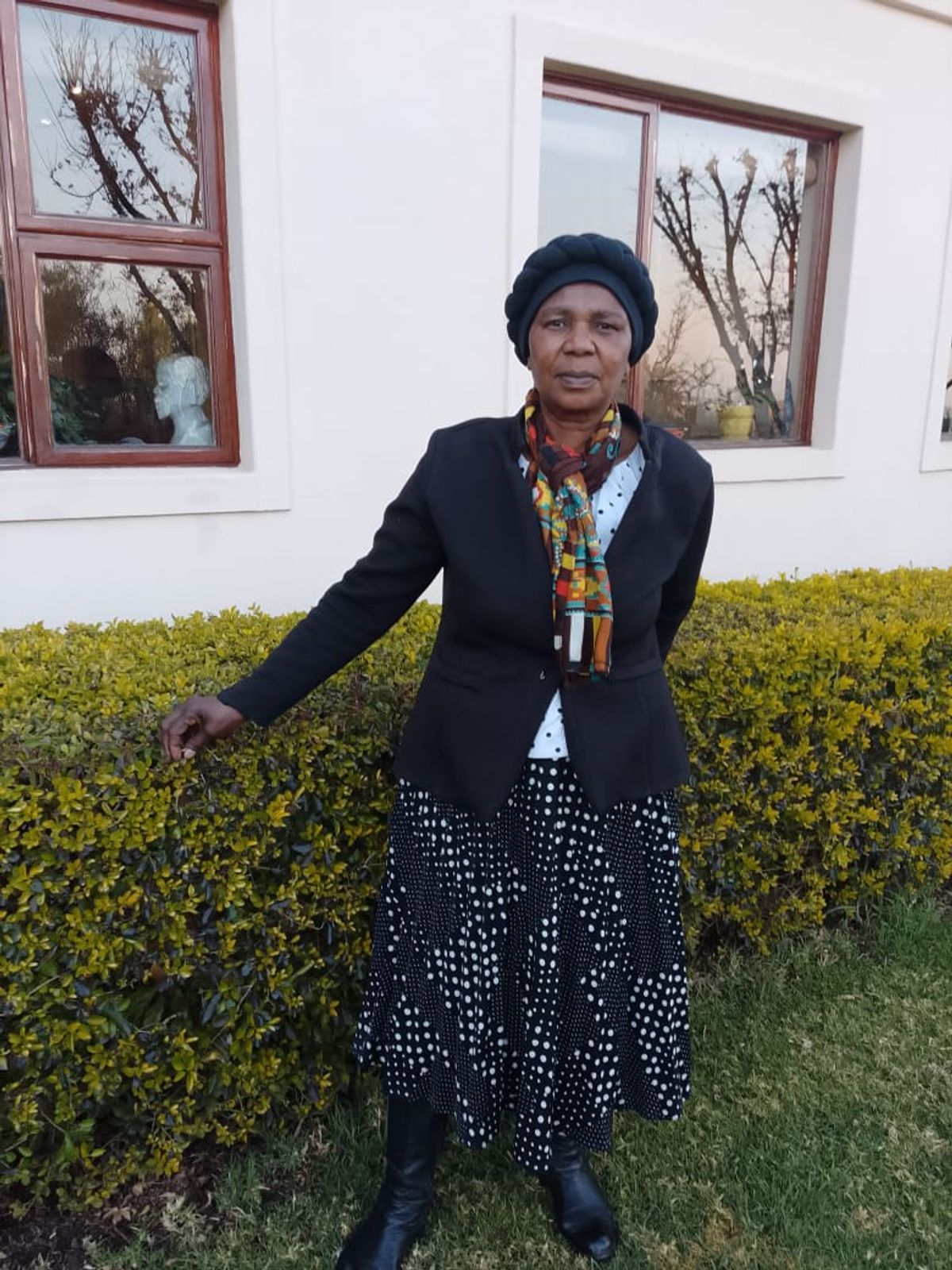
She gets paid 4,000 Rands or $243 per month, which is on the higher end for a domestic worker in South Africa. “Every morning, my employer is happy, and she thanks me for doing everything for her,” says Gladys. “I like that she thanks me every day. A lot of employers don’t say thank you because they are paying you.” Still, even a decent salary as a domestic worker is not enough to cover her children's college costs and her grandchildren's school costs. The finances and commute take their toll as she gets older.
Joining the South African Domestic Service and Allied Workers Union (SADSAWU) was one of the best decisions she's made, Gladys says.
Over a decade ago, Gladys joined the South African Domestic Service and Allied Workers Union (SADSAWU) after a woman on her bus commute convinced her to try a workshop. It was one of the best decisions she’s made, she says. SADSAWU fights for the rights of domestic workers across South Africa by organizing and educating employed domestic workers. Members strive for national and global recognition as domestic workers who help build the global economy.
In Gladys’ area, there aren’t many companies that employ women, so most are forced into domestic labor. Plus, women often lack education, making domestic work one of the few jobs available to them. She says that most black people of her generation didn’t finish school. Since COVID, it’s been harder to find jobs, even as a domestic worker, with many unemployed families and children living on the streets. Even now, a family will often live in just one room. But she believes the prospects for the next generation are better. “Today our children learn nicely at school until grade 12,” she says. “They have a nice future, not like us.”
The union has taught Gladys to read contracts and not to sign anything she doesn’t know what it says. “They tell us to take the papers to your SADSAWU organizer or to your children to check for you,” she says. “I took my paper to the office and phoned the organizer.” She has also attended training workshops that help her know her rights. “If something isn’t right, they teach us to call our employer, sit down and talk to her, show her our rights, and treat her with respect.” She adds that SADSAWU is always fighting for members to earn more money and to be able to eventually save or take out a loan to build their own houses.
"When I travel on the bus to New Castle, I am always preaching about SADSAWU.”
For her future, Gladys would like to work maybe five more years as a domestic worker and then start a small business, such as selling fruits and vegetables from her garden. She wouldn’t mind becoming a cook, something she used to do while working in a restaurant years ago. Today, if there’s a wedding, a friend might call her to cook for it and pay her.
She’d also like to work as an organizer in the SADSAWU office. “Already, I open my mouth too much. When I travel on the bus to New Castle, I am always preaching about SADSAWU.” Last year, she recruited 40 new members. This year, her goal is to sign up at least 50 new members. “When I joined, I didn’t close my mouth. I opened my mouth. I am very strong. If you [treat the other person with respect], they will respect you too.”
Currently, her three kids are hoping for better-paying, more versatile jobs than domestic work. Her firstborn is driving trucks, her second son works in security, and her daughter is starting at university and wants to become a nurse or a teacher. “My kids have more opportunities than I did,” she says, “and I feel good about that.”