

Transition to Formal Economy
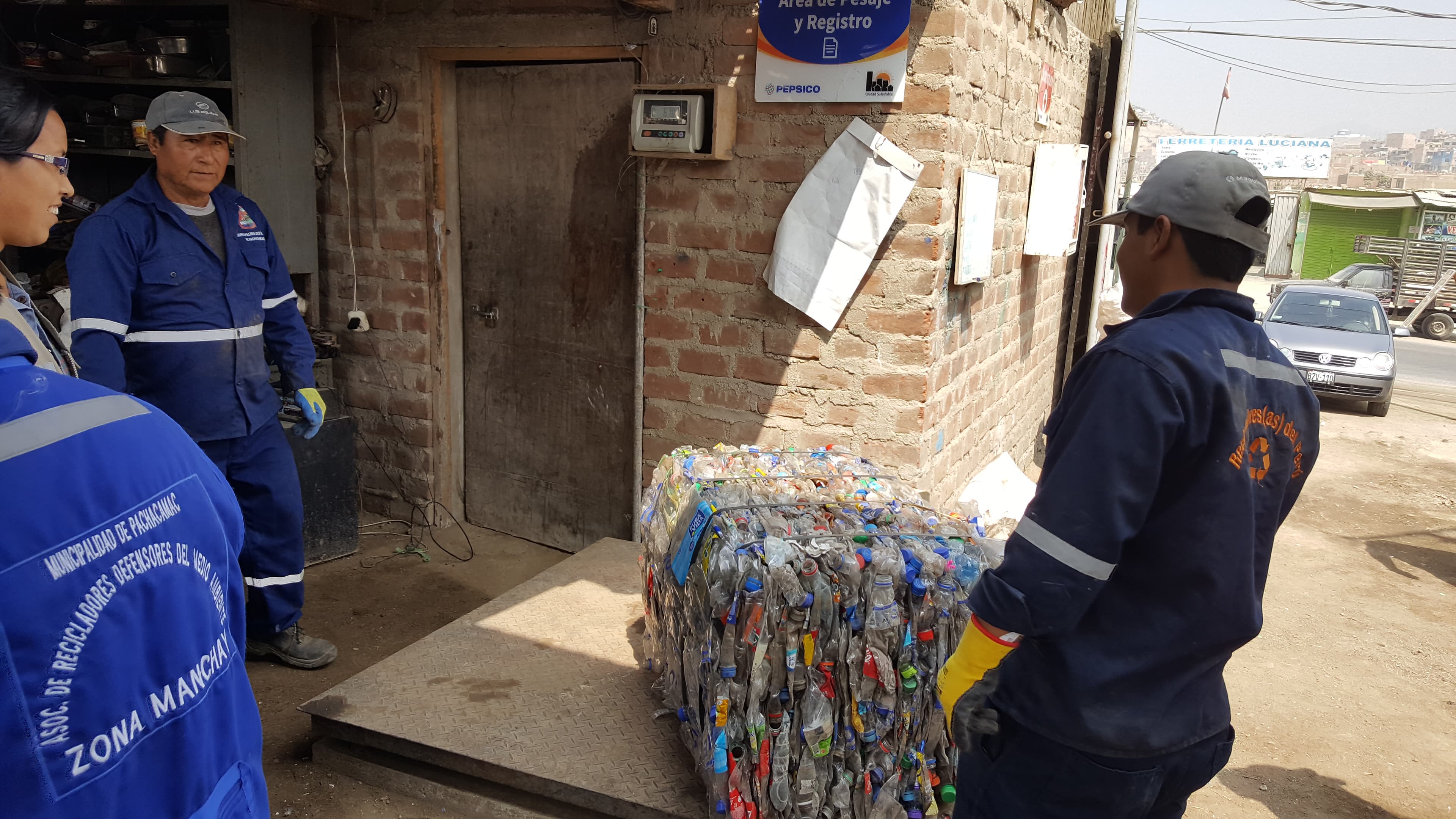
Supporting transitions to the formal economy is necessary to expand access to rights, protections, and economic opportunity.
Why this matters
Transition to Formal Economy
Millions of workers in the informal economy operate without legal recognition, stable incomes, or access to social protections like health care, pension, sick leave or family leave. Expanding pathways to formalization enhances workers’ access to rights, economic opportunity and ability to build a stable livelihood. By working with partners to identify practical solutions, this thematic area helps address systemic barriers so workers can overcome the cycle of vulnerability. Advancing formalization and the enforcement of labor protections strengthens communities and promotes more inclusive adn equitable growth.
Key figures
94%
of the world's informal workers are in developing and emerging countries.
25%
increase in average earnings is seen when workers formalize.
Resources
Related publications & data
Evidence, data, and publications linked to transition to formal economy.
Latest publications
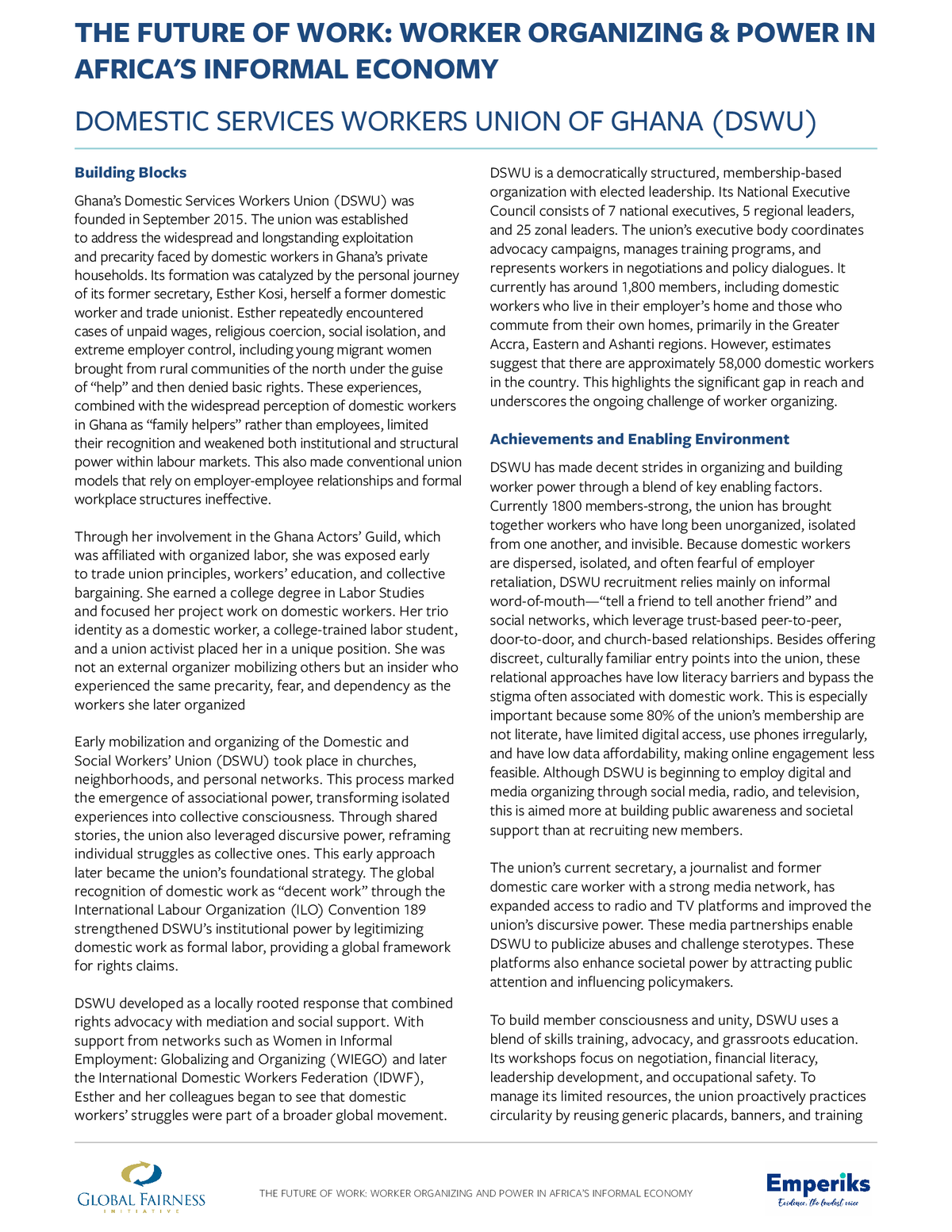
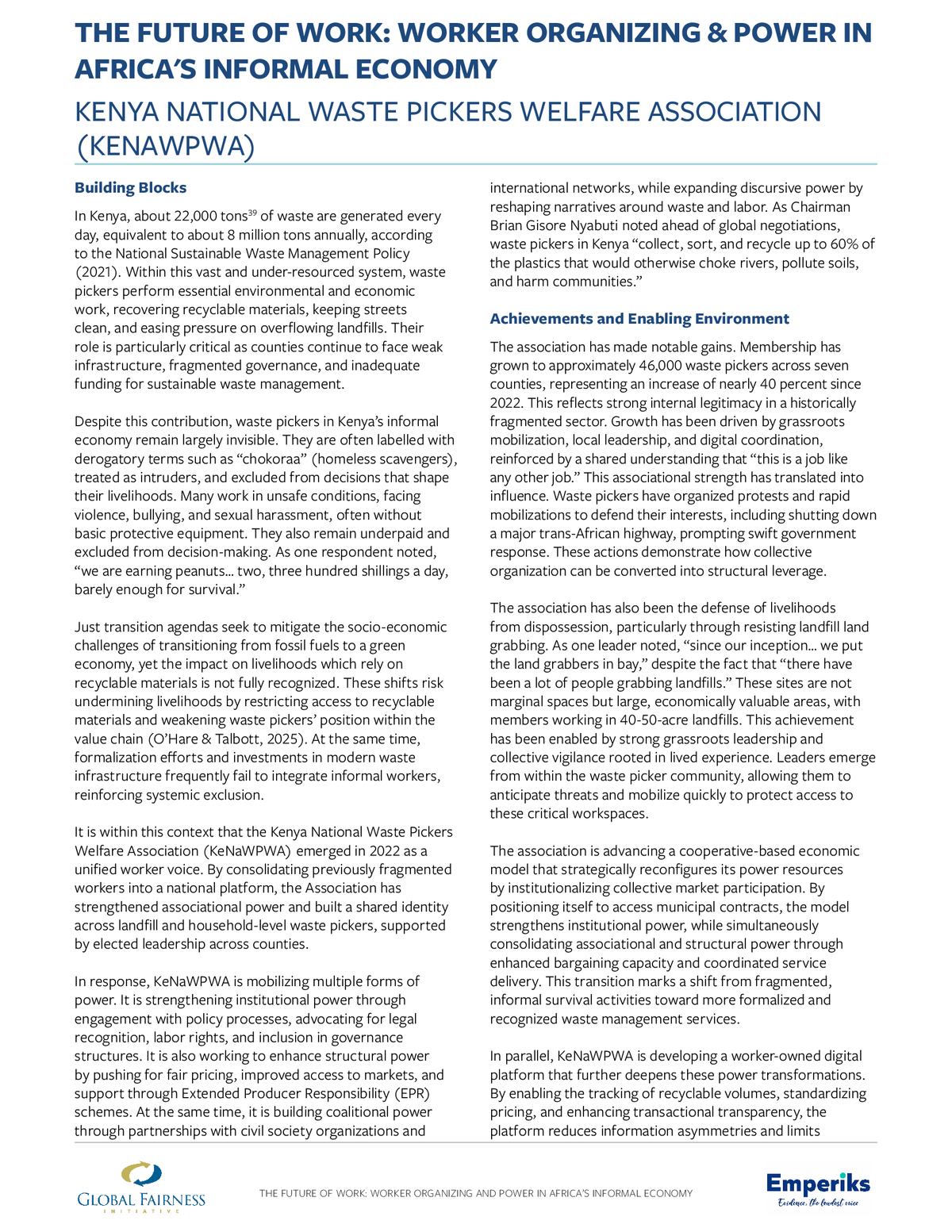
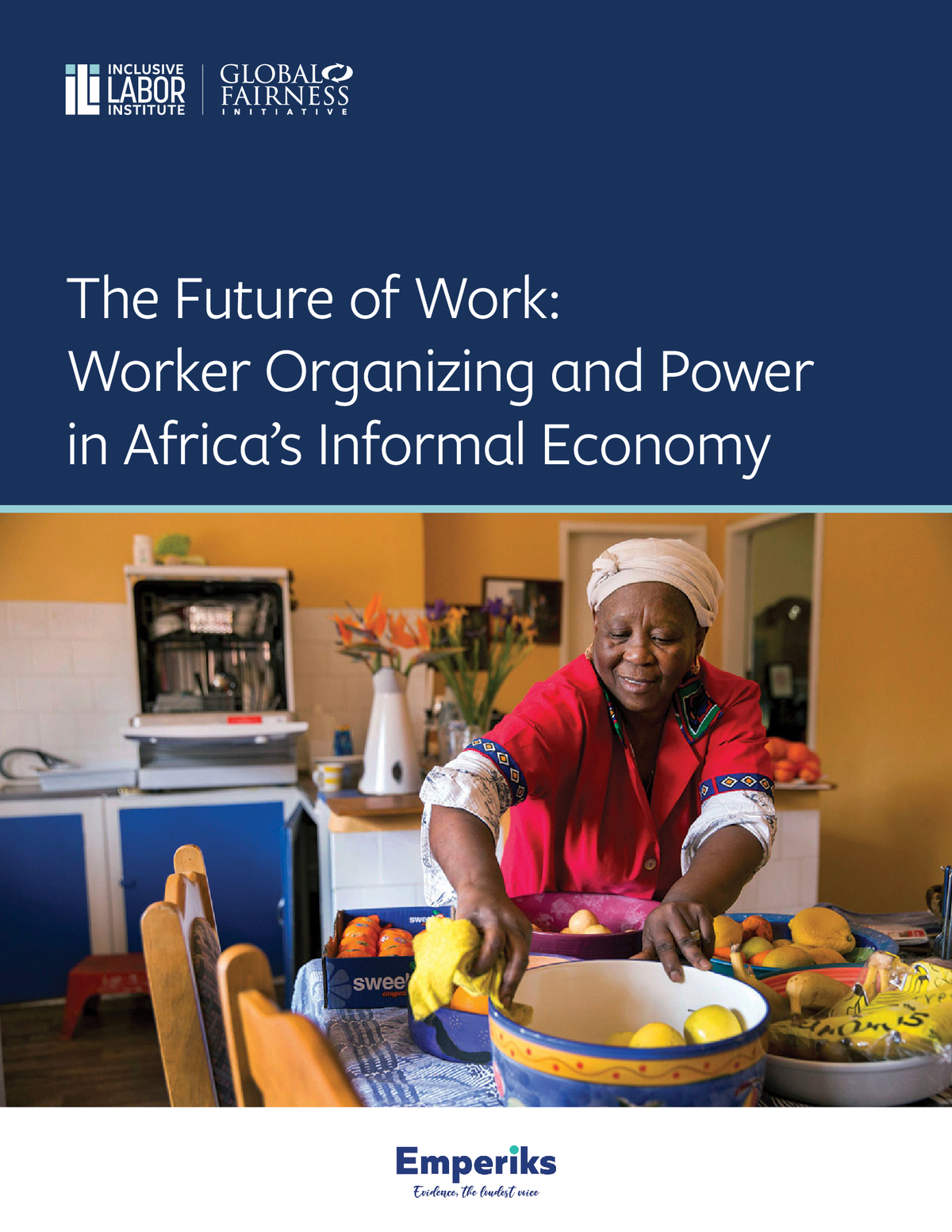
The Future of Work: Worker Organizing and Power in Africa's Informal Economy
Global Fairness Initiative
Data & evidence
Dashboards and visualisations bringing together key indicators for transition to formal economy.