

Women's Economic Empowerment
Removing barriers so women can fully and equitably participate in the economy.
Why this matters
Women's Economic Empowerment
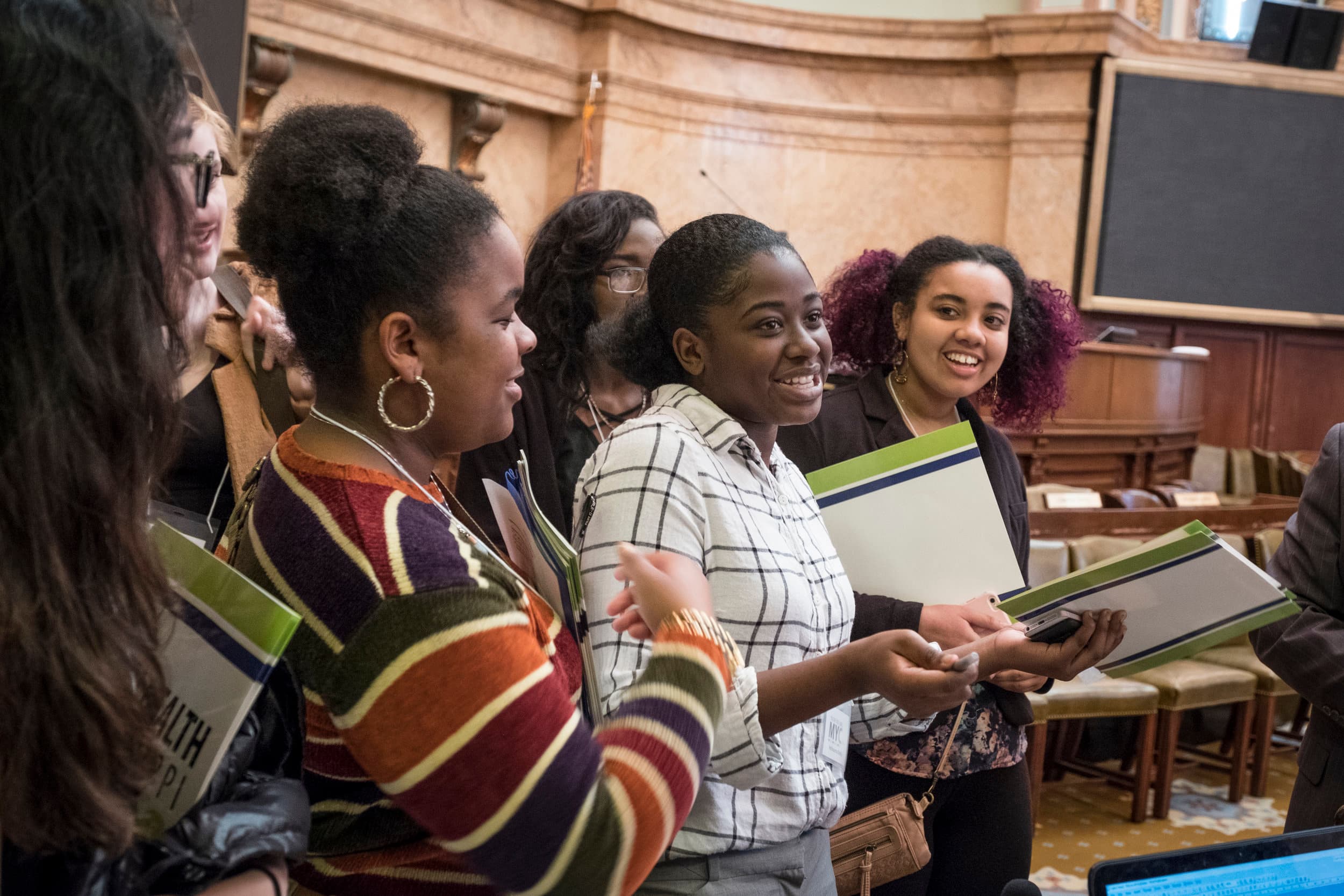
In many cases around the world, informal work is often the only way for women to earn an income, due to care responsibilities, fewer educational opportunities, and cultural and social attitudes that limit how far they can travel. The precarious nature of informal work keeps women stuck in low-income work. When women can fully participate in the economy, their wages rise, they can send children to school and invest in their homes, leading to growth for the whole community. Addressing structural barriers —such as discrimination, unpaid care burdens, and limited access to resources —creates more equitable labor markets. Centering women’s lived experiences ensures that policies and programs lead to meaningful and lasting change.
Key figures
80%
of women in the Global South work in the informal economy.
$12T
could be added to global GDP by advancing women’s equality.
Resources
Related publications & data
Evidence, data, and publications linked to women's economic empowerment.
Latest publications
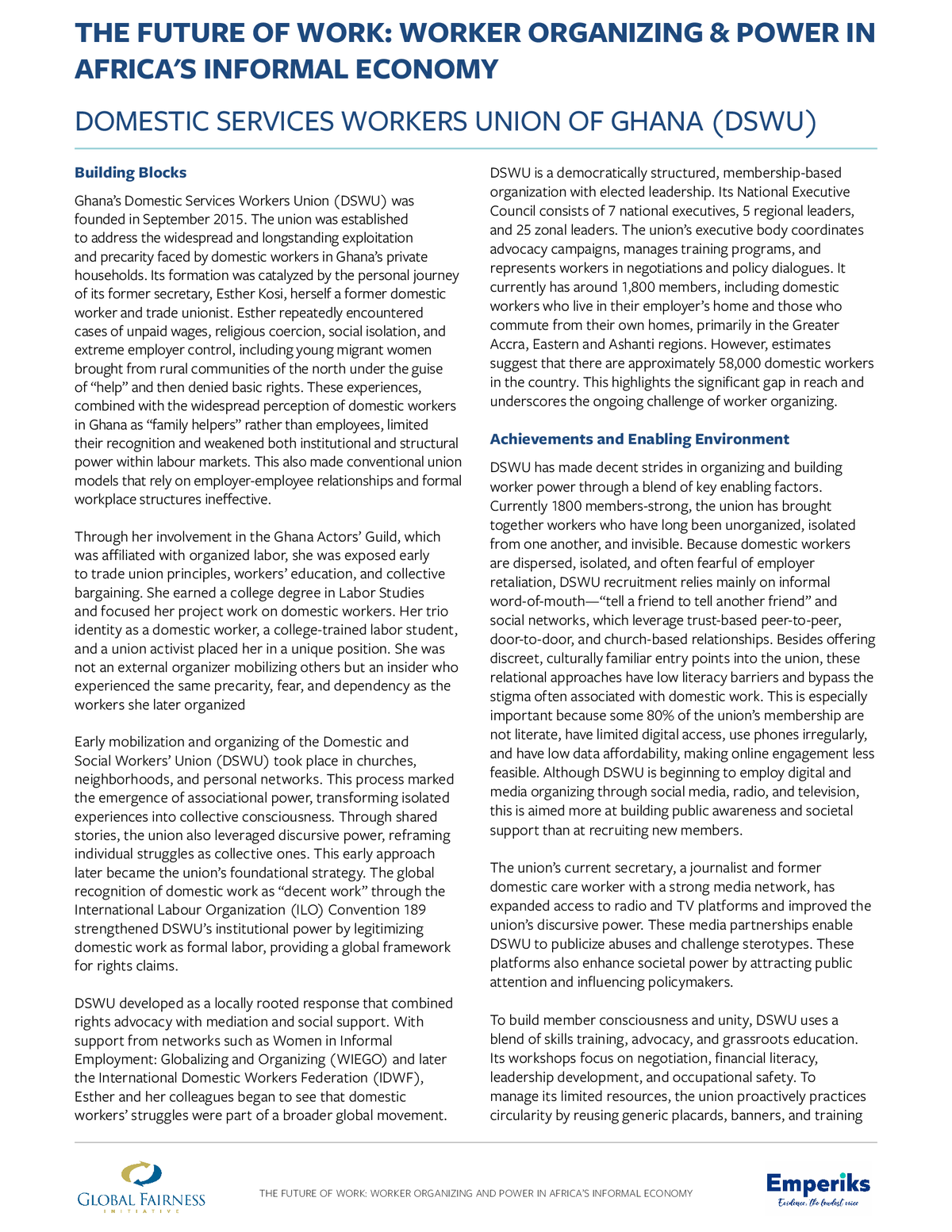
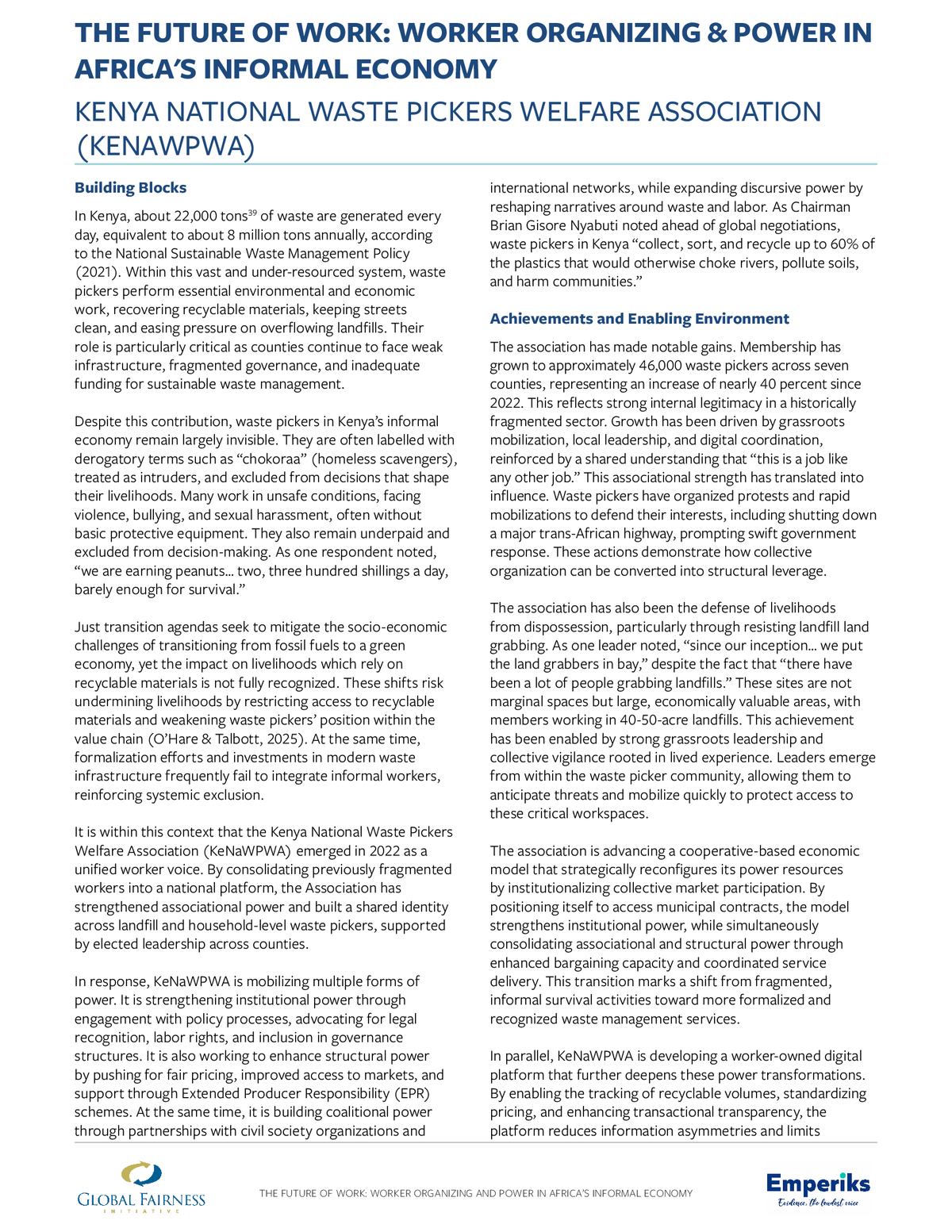
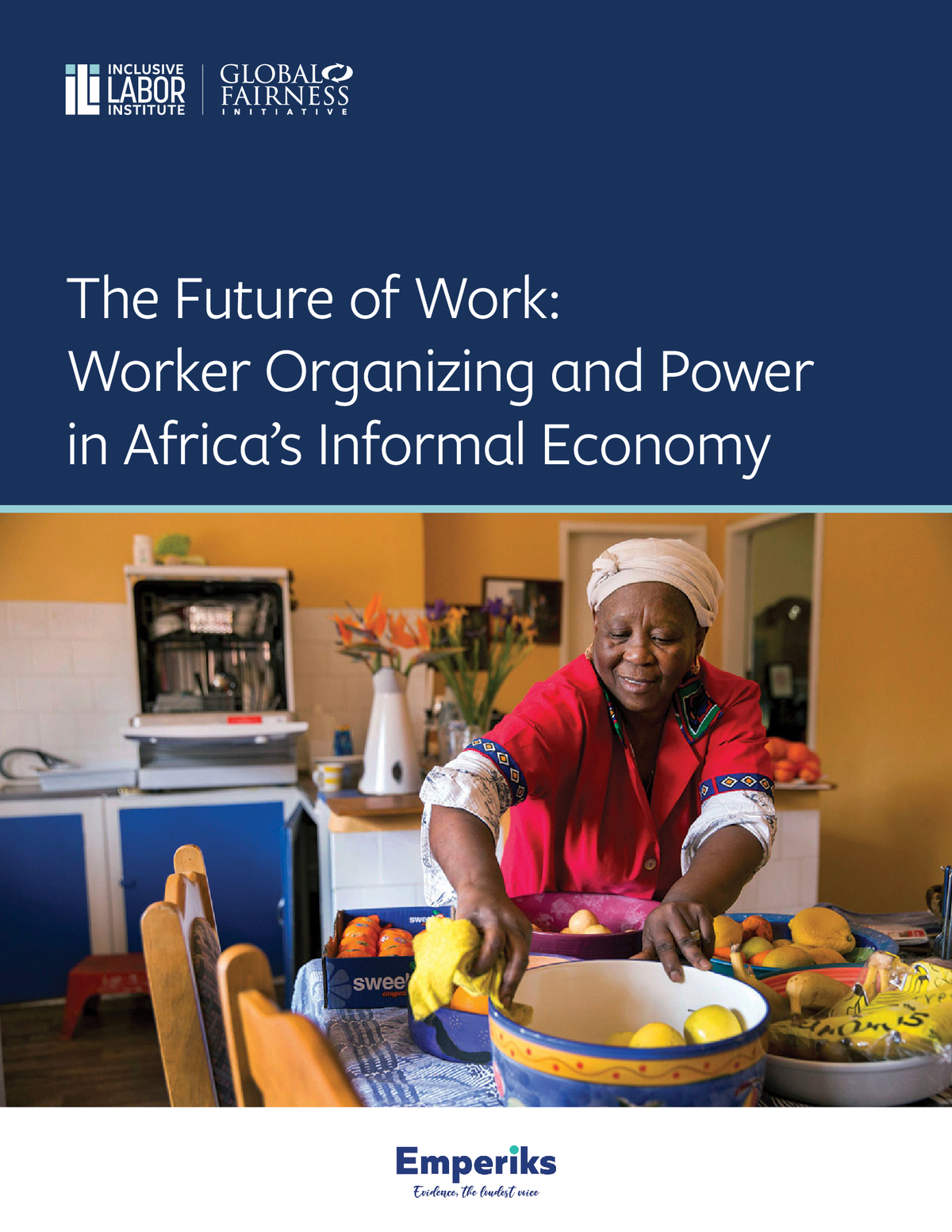
The Future of Work: Worker Organizing and Power in Africa's Informal Economy
Global Fairness Initiative
Data & evidence
Dashboards and visualisations bringing together key indicators for women's economic empowerment.